
When I work with homeowners throughout the DC area, one of the most rewarding conversations we have is about creating a pollinator garden dc can be proud of. There’s something special about watching your outdoor space come alive with butterflies, bees, and hummingbirds, all because you chose plants that welcome them home.
At Lanier Landscapes, I believe the best gardens do more than look beautiful. They tell a story, support the local ecosystem, and create connections between your home and the natural world around it. A thoughtfully designed pollinator garden delivers all of this while requiring less water, fewer pesticides, and minimal maintenance once established.
The truth is, about 35% of our food crops and 75% of flowering plants depend on pollinators to reproduce. But these essential species are in trouble. Habitat loss, pesticides, and lack of pollinator-friendly plants have all contributed to dramatic declines in pollinator populations. The good news is that your landscape can be part of the solution.
Why These Plants Matter for Your Pollinator Garden DC
Before we get into specific plants, it’s nice to understand why certain species are so important for successful pollinator gardens. Plants have co-evolved alongside our local pollinators for thousands of years. They speak the same language, if you will. Bees, butterflies, and other pollinators have adapted to recognize, feed from, and rely on these specific plants.
Pollinator-friendly plants also offer practical benefits for DC homeowners. They have deeper root systems that prevent erosion and manage stormwater runoff which is a huge plus in our region of the country. They require less watering once established since they’re adapted to our climate. And best of all, they don’t need the fertilizers and pesticides that harm the pollinators you’re trying to attract.
Eight Perennials for a Thriving Pollinator Garden in DC
When I’m hand-sourcing plants for a pollinator garden DC can be proud of, I always look for species that offer multiple seasons of interest, attract diverse pollinator species, and thrive in our regional conditions. Here are eight of my absolute favorites.
1. Allium
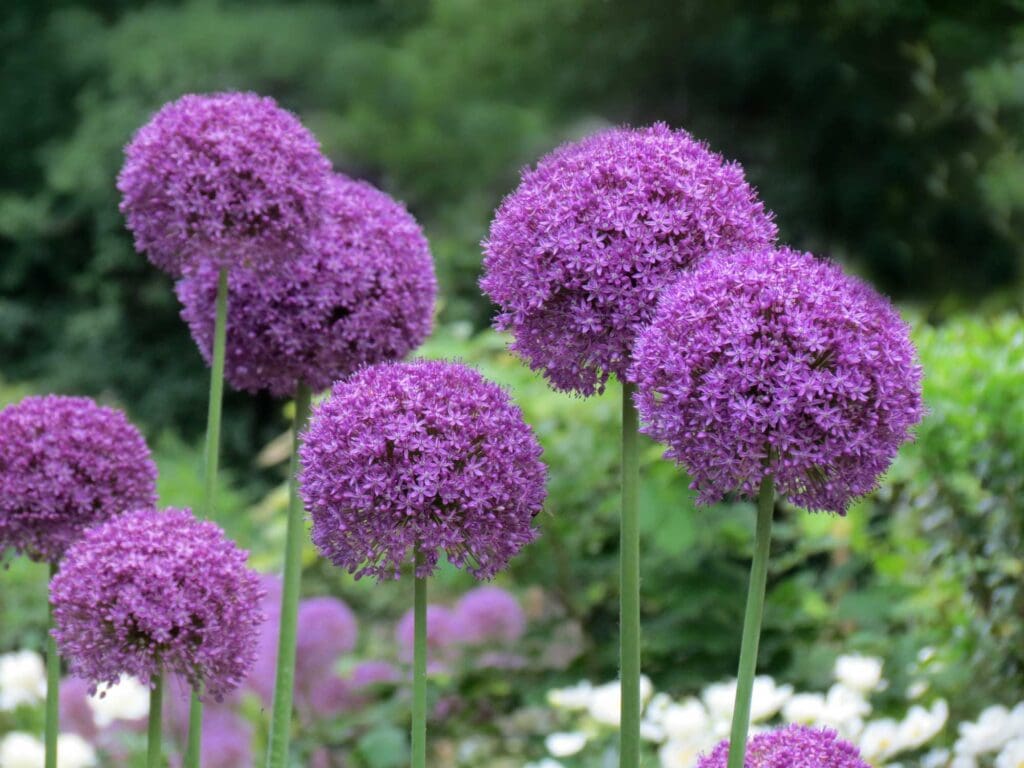
If you’re looking for a plant that bridges late spring into early summer in your garden, allium is a showstopper. These ornamental onions produce spherical clusters of flowers that sit atop tall, slender stems.
What I love most about allium is how it attracts pollinators in waves. Bees, butterflies, and other insects absolutely swarm these blooms in late spring, creating this energy that makes your garden feel alive. The architectural quality of the flower heads also provides incredible visual interest, and they look stunning when planted in drifts throughout a border.
Even after the flowers fade, the seed heads remain attractive well into summer, adding texture and structure to your garden. Plus, deer and rabbits tend to avoid them, which is always a win in our area.
Growing conditions: Full sun, well-drained soil, 1-3 feet tall (varies by variety)
2. Amsonia Blue Ice (Amsonia orientalis ‘Blue Ice’)
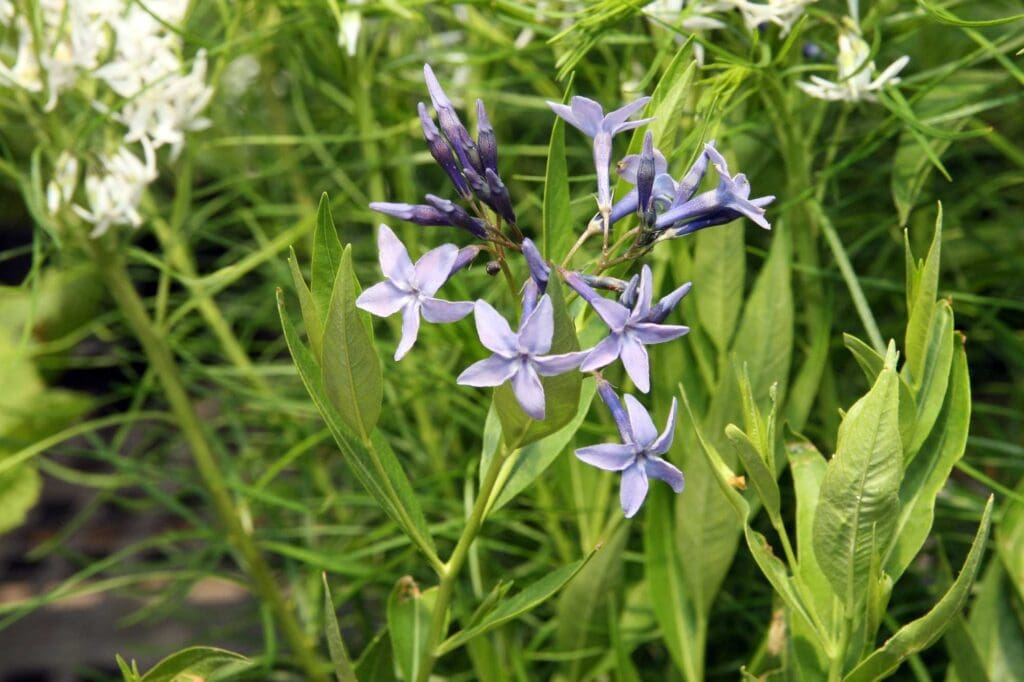
Here’s a plant I absolutely adore for the front of garden beds, Amsonia Blue Ice is the perfect edging perennial for a pollinator garden. In spring, it produces clusters of delicate, star-shaped blue flowers that create this soft, romantic effect along pathways and borders.
But what really sets this plant apart is how it performs throughout the entire season. After the spring bloom, the fine-textured, willowy foliage stays gorgeous and tidy all summer long. Then in fall, the entire plant turns this breathtaking golden-yellow that just glows in the autumn light.
Pollinators love the spring flowers, and I love how low-maintenance this plant is once established. It forms neat, well-behaved clumps that don’t need staking or constant deadheading. It’s one of those plants that just quietly does its job beautifully year after year.
Growing conditions: Full sun to part shade, average to moist soil, 12-18 inches tall
3. Wild Columbine (Aquilegia Canadensis)
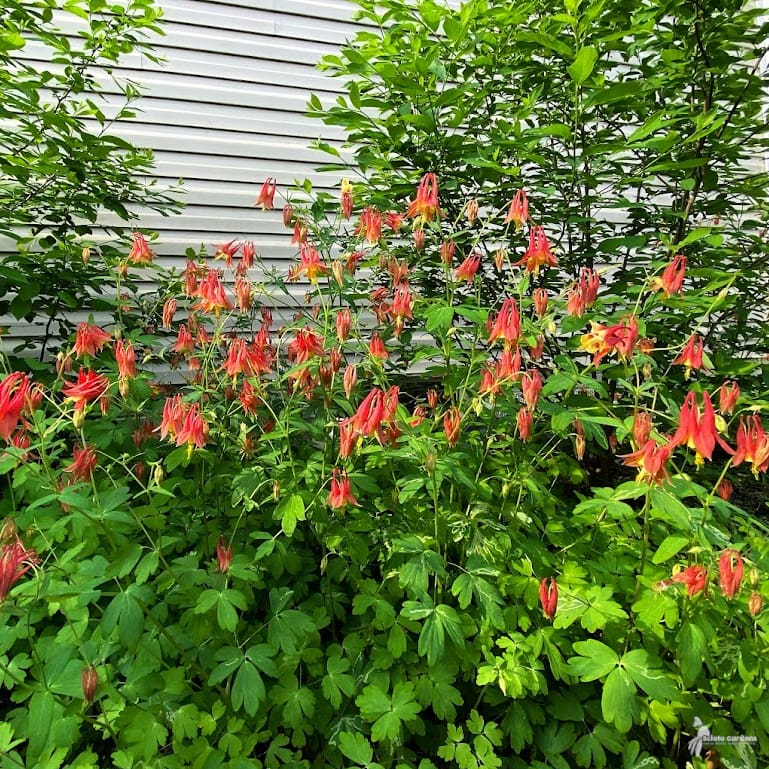
For homeowners who want to attract hummingbirds to their garden, wild columbine is essential. Those distinctive red and yellow bell-shaped flowers that dangle upside-down are perfectly designed for hummingbird beaks, though butterflies, bees, and moths visit them too.
Wild columbine is a spring bloomer, typically flowering from April through June. While individual plants live 3-5 years, they self-seed readily, so you’ll always have new plants coming up. This creates a natural, evolving look that I love in pollinator gardens, it feels less manicured and more like a living, breathing ecosystem.
This perennial also handles part shade beautifully, making it perfect for those woodland edges or areas under trees where many sun-loving perennials won’t thrive.
Growing conditions: Part shade to sun, average to dry soil, 1-3 feet tall
4. Blue Wild Indigo (Baptisia Australis)
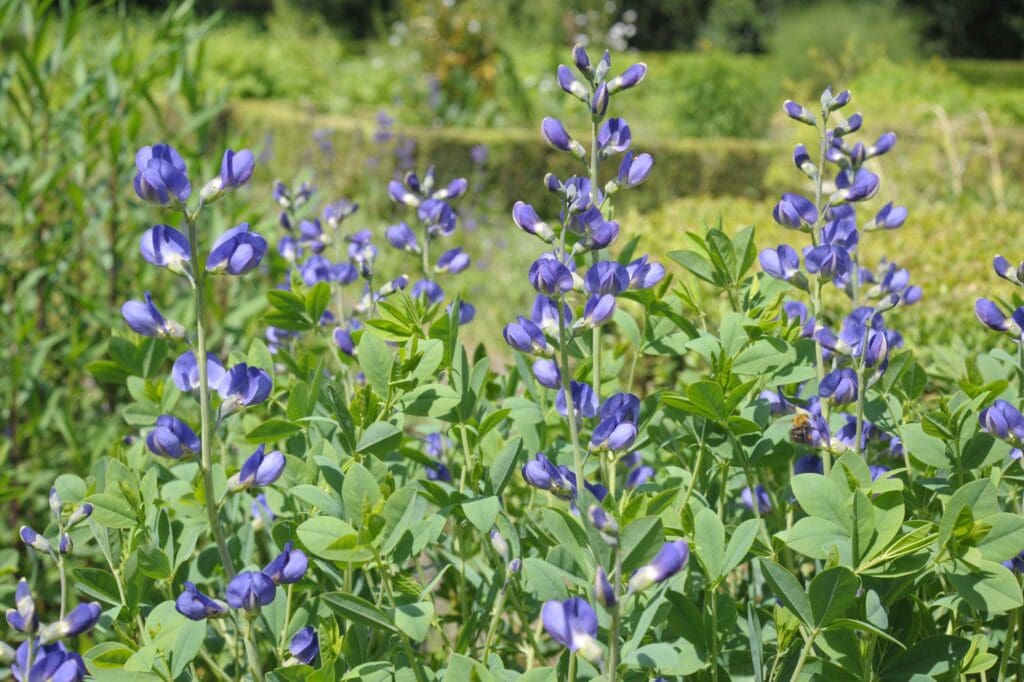
When I want to create serious presence in a pollinator garden DC loves, I reach for Blue Wild Indigo. This perennial is a powerhouse, it produces intense blue-purple flowers in mid-spring that are just stunning, and the plant itself grows into this substantial 3-4 foot tall specimen with beautiful blue-green foliage.
What makes Baptisia so valuable is its combination of beauty and toughness. These gorgeous flowers attract bumblebees like crazy (watching them work these blooms is mesmerizing), and the clover-like leaves remain attractive all season long. The seed pods that follow the flowers add visual interest and rattle in the breeze, which is a lovely little detail.
Another huge bonus is that Baptisia is deer-safe. In a region where deer can decimate a garden overnight, having a tall, showy perennial that they won’t touch is invaluable. Plus, once established, this plant is incredibly drought-tolerant and long-lived. I’ve seen 20-year-old baptisia that just keeps getting better.
Growing conditions: Full sun to part shade, well-drained soil, 3-4 feet tall and wide
5. Dicentra
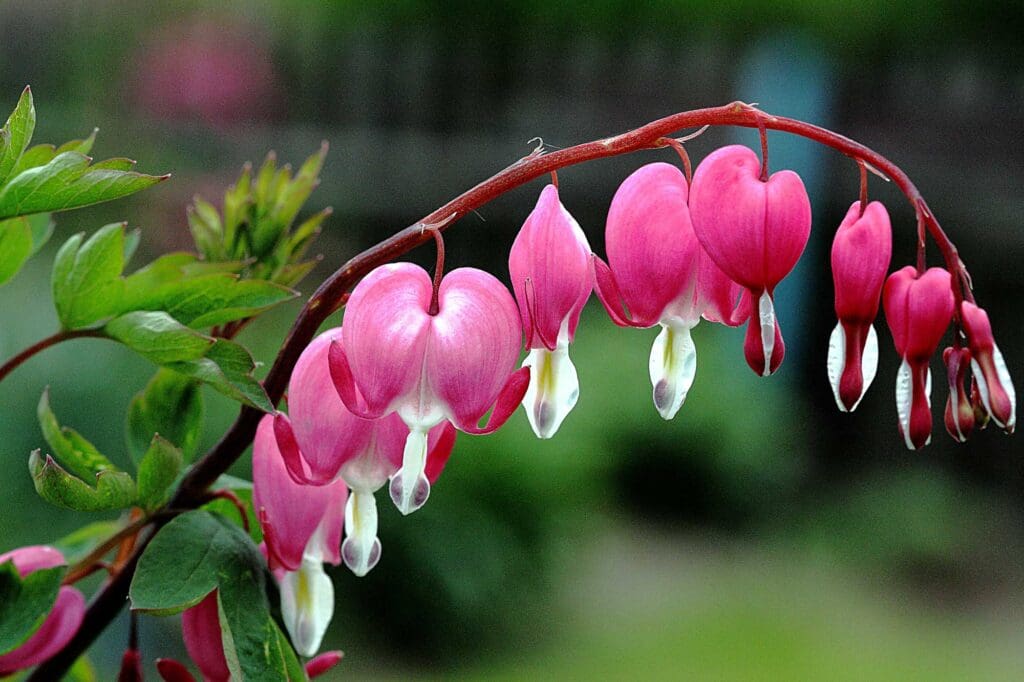
For those woodland edges and shadier spots in your garden, bleeding heart is pure magic. Those distinctive heart-shaped pink flowers that dangle from arching stems in mid-spring are enchanting, there’s no other plant quite like it.
What I especially love about Dicentra is the gorgeous ferny foliage that frames those delicate flowers. The entire plant has this soft, romantic quality that works beautifully in woodsy gardens or beneath the canopy of larger trees. It’s perfect for creating that cottage garden feel while still supporting pollinators.
Early-season bumblebees are the primary visitors to bleeding heart flowers, and watching them work their way along those arching stems is delightful. The plant tends to go dormant in the heat of summer (the foliage yellows and dies back), so I like to plant it with ferns or hostas that will fill in the space once it retreats.
Growing conditions: Part to full shade, moist, rich soil, 1-2 feet tall
6. Heuchera Berry (’Berry Smoothie’)
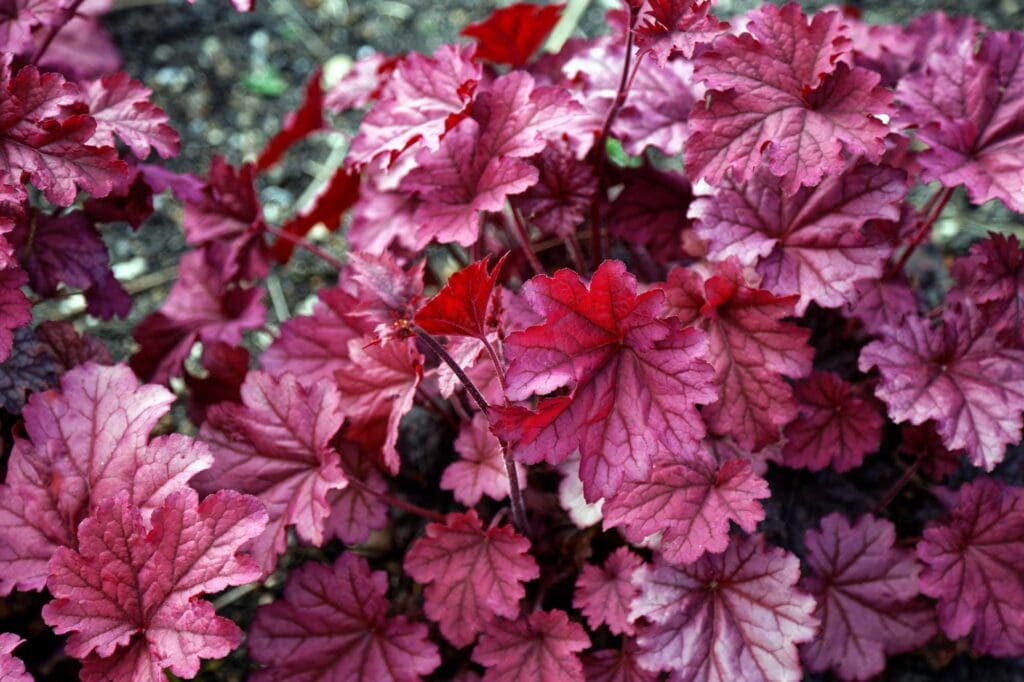
Sometimes a pollinator garden needs a plant that’s as much about foliage as it is about flowers, and that’s where Heuchera ‘Berry Smoothie’ shines. The veined leaves are timeless, they create this stunning tapestry of color that persists from spring through fall.
In late spring and early summer, delicate pink flowers rise above the foliage on thin stems, attracting small pollinators and hummingbirds. But honestly, it’s the foliage that steals the show. The beautifully veined leaves provide consistent visual interest and work as a groundcover or edging plant.
I use Heuchera extensively in designs because it’s so versatile. It works equally well in containers, at the front of borders, or massed as a groundcover. The evergreen (or semi-evergreen in our climate) foliage means your garden has structure and color even in winter.
Growing conditions: Part shade to sun, well-drained soil, 10-12 inches tall (foliage), flowers to 18 inches
7. Powder Blue Giant Iris (Iris Cristata)
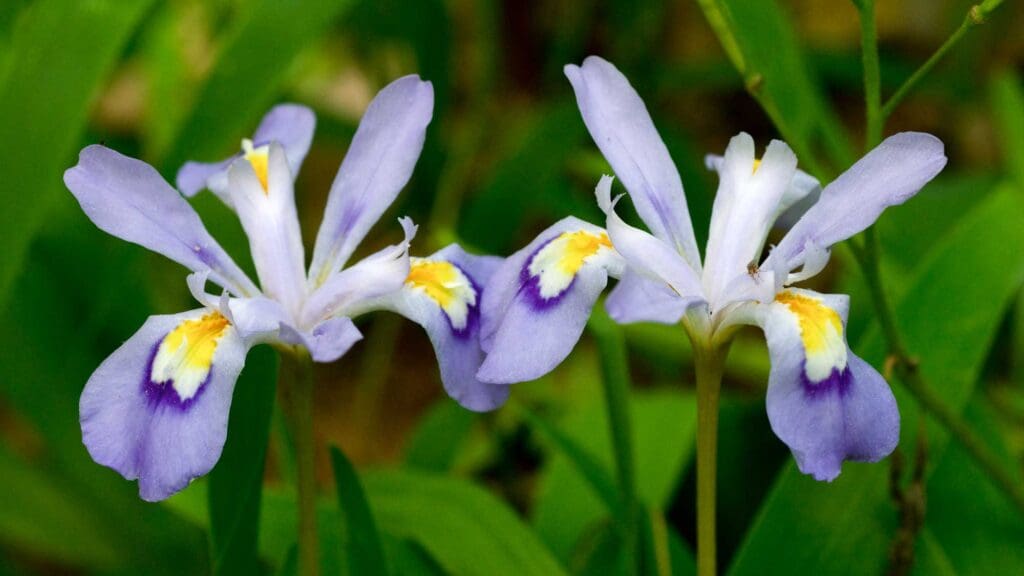
Don’t let the name fool you, despite being called “giant,” this iris is only about 6 inches tall, making it perfect for the front of your garden or as a groundcover. The light blue flowers with yellow flecks are absolutely charming in spring, creating carpets of color in shaded areas.
What makes this little iris so valuable is that it thrives in conditions where many other flowering plants struggle. It spreads slowly by rhizomes to create colonies, and deer don’t like it, which is always a huge plus.
I love using Powder Blue Giant Iris along woodland paths or at the base of trees where lawn won’t grow. The flowers attract small bees, and the low-growing habit means it plays well with other spring ephemerals and shade perennials.
Growing conditions: Part shade to shade, moist, well-drained soil, 6 inches tall
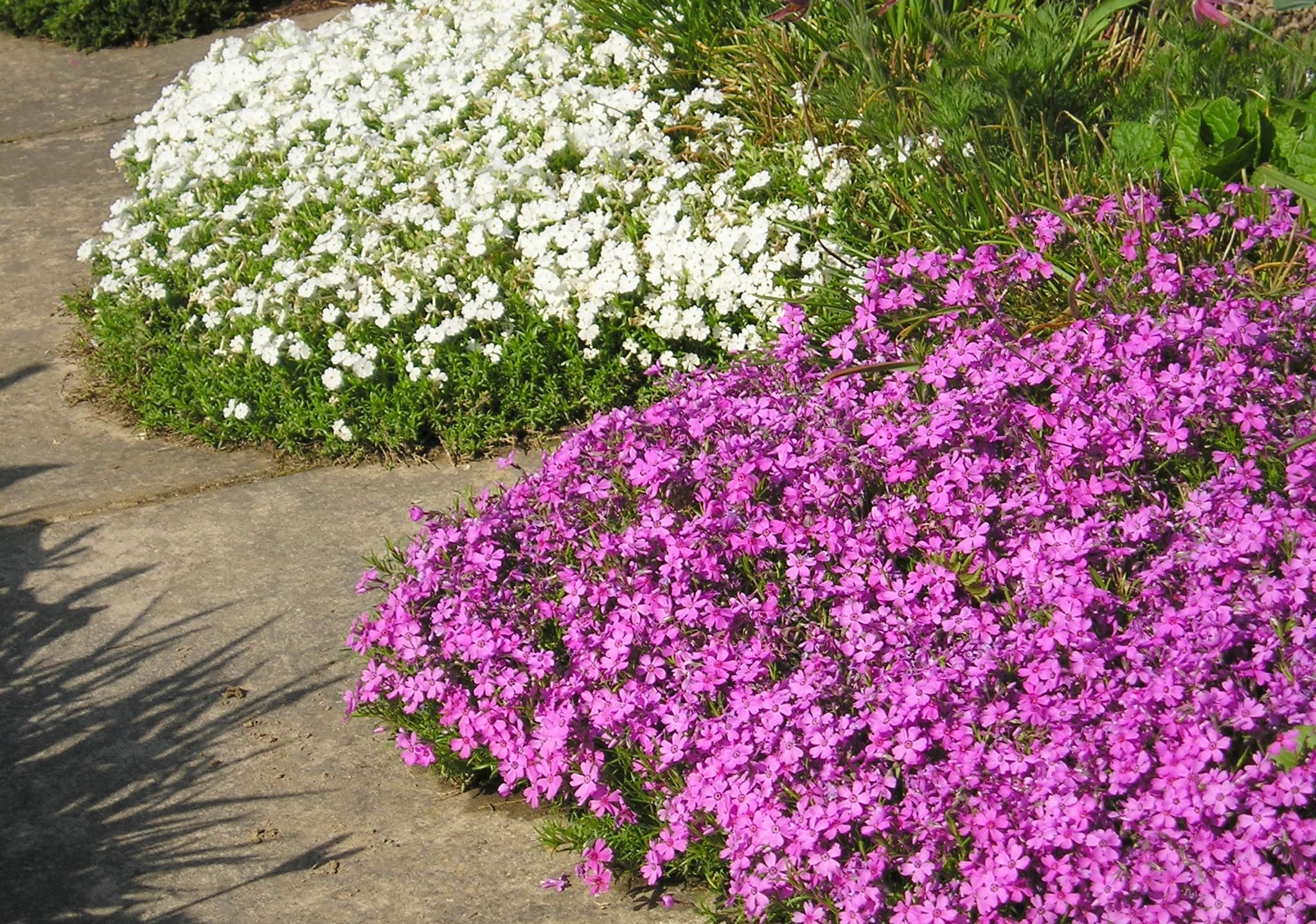
8. Moss Phlox / Creeping Phlox (Phlox Subulata)
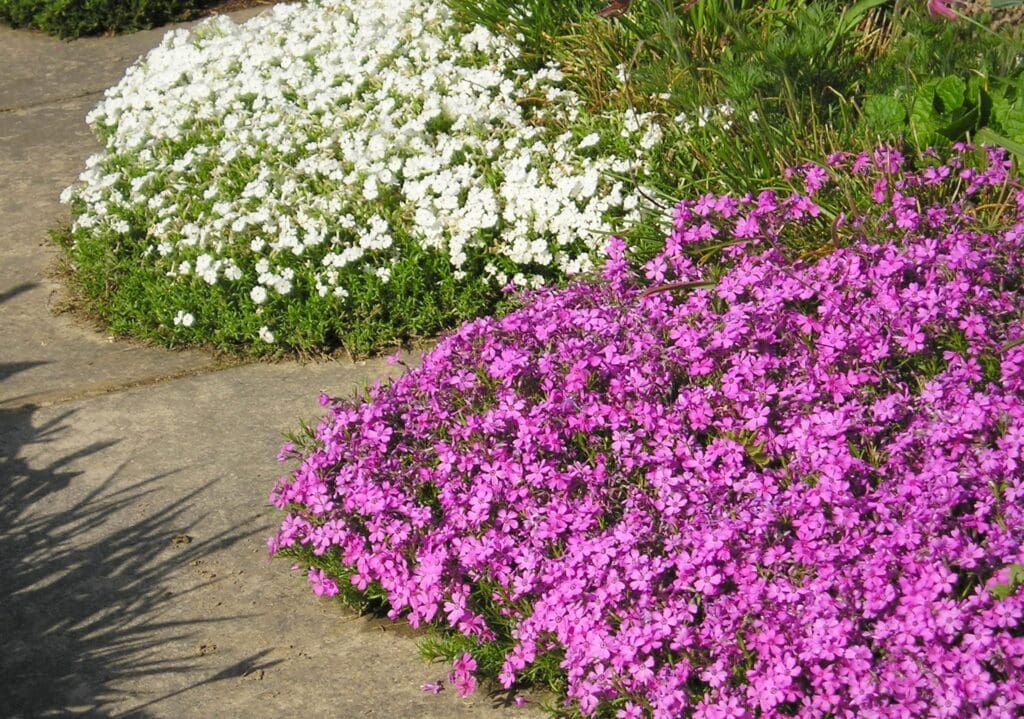
For early spring color that stops traffic, moss phlox is unbeatable in a garden. This low-growing perennial creates sheets of color in pink, purple, white, or light blue, and when it blooms in April and May, it’s so covered in flowers you can barely see the foliage.
What I love about Phlox subulata is its versatility. It works beautifully cascading over walls, filling in between stepping stones, edging pathways, or carpeting slopes. The evergreen foliage provides year-round interest, and the spring bloom is one of the first major nectar sources for emerging pollinators.
Butterflies and bees absolutely swarm moss phlox when it’s in bloom. It’s one of those plants where you’ll find yourself just standing there watching all the pollinator activity. Plus, it’s drought-tolerant once established and requires virtually no maintenance.
Growing conditions: Full sun, well-drained soil, 4-6 inches tall, spreads 12-24 inches
Designing Your Pollinator Garden DC Loves
Creating a thriving pollinator garden isn’t just about choosing the right plants, it’s about designing with intention. Here are the principles I follow when collaborating with homeowners on pollinator-friendly landscapes.
Layer your plantings. Combine trees, shrubs, and perennials at different heights to create a diverse habitat. This three-dimensional structure provides shelter, nesting sites, and food sources at multiple levels.
Plant in drifts, not singles. Pollinators are much more likely to notice and visit groups of the same plant. I typically recommend planting in odd-numbered groups of at least three to five plants of each species.
Ensure continuous blooms. Choose plants that flower at different times from spring through fall. This provides food throughout the entire growing season, not just one spectacular month.
Include water sources. A shallow dish with stones that rise above the water level gives pollinators a safe place to drink. This simple addition dramatically increases the value of your pollinator garden.
Resist the urge to be too tidy. Leave plant stalks and stems standing through winter. They provide nesting sites and overwintering habitat for bees and other beneficial insects. You can cut them back in early spring before new growth emerges.
Say no to pesticides. This is non-negotiable. Pesticides kill the very pollinators you’re trying to attract. If you’re dealing with pest issues, there are always ecological solutions that don’t involve chemicals.
Creating a DC Pollinator Garden You Won’t Want to Leave
When I hand-source plants for clients’ landscapes, I’m always thinking about how each plant will perform not just this year, but five years from now, ten years from now. A well-designed pollinator garden evolves and improves over time as plants mature, self-seed, and create an increasingly complex habitat.
These eight perennials are just the beginning. There are dozens more species that thrive in our region and support pollinators. But starting with these reliable, beautiful, and ecologically valuable plants will give you a foundation for a landscape that’s both stunning and sustainable.
Your outdoor space should tell your story while supporting the web of life that makes our region so special. A garden built for pollinators does exactly that, it’s beautiful, functional, personal, and deeply connected to DC.
Ready to transform your landscape into a haven for pollinators? Let’s work together to hand-source plants and create a pollinator garden dc that welcomes butterflies, bees, and hummingbirds home. Your outdoor space and the local ecosystem will thank you.
I’m a Chevy Chase, DC-area landscape designer with 3 kids and 2 dogs that always keep me on my toes. Nature has always been a part of my life and as a child, I spent countless hours in the garden alongside my mother, learning the rhythm of the seasons and the joy of nurturing a living space. Now, I continue to find inspiration in the beauty of nature.
I founded Lanier Landscapes in 2013 after noticing how many outdoor spaces felt impersonal — beautiful but lacking warmth, functional but uninspired. I’m here to help you create an outdoor space that you can’t wait to come home to.
