
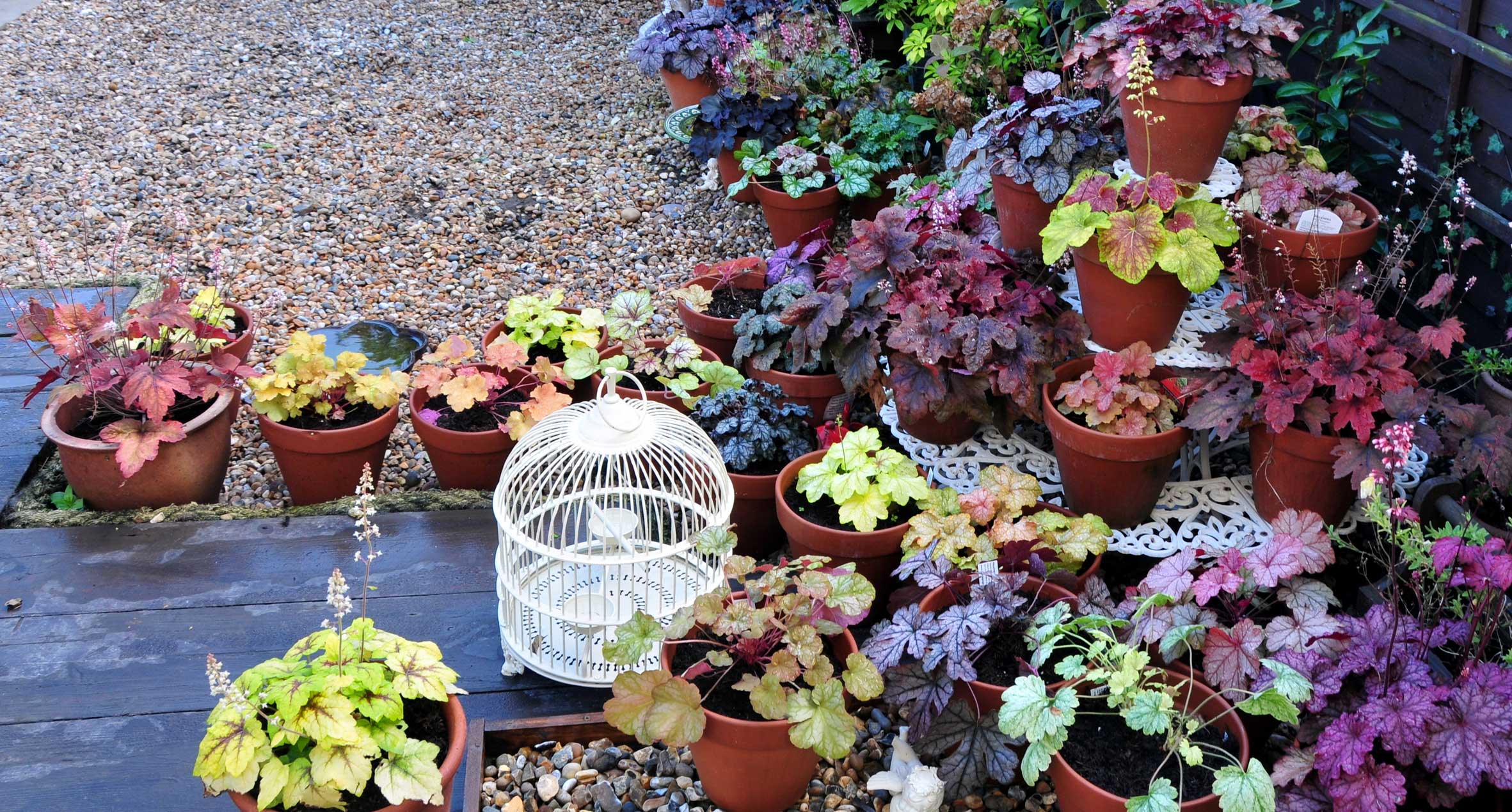
Flowers get all the credit, but they come and go in a matter of weeks. Foliage is what really carries a garden bed through spring, summer, and fall, and understanding the different types of foliage plants for texture is what separates a garden that looks planned from one that looks like a random collection of plants.
When I’m designing a perennial bed for a client here in the DMV, I always start by thinking about leaf color, shape, and texture before I even think about bloom time.
Perennials with striking foliage come back year after year, and when you layer a few different types together, you get a garden that feels rich and full even when nothing is in bloom.
Below, I’m breaking down my favorite types of foliage plants for texture into four categories: color, variegation, texture, and bold leaf shape to make it even easier for you to know what types of plants you’ll want to request to add texture to your yard. Even better? A lot of these are native to our region too, which means less maintenance and more support for local pollinators.
Types of Foliage Plants for Color That Stops You in Your Tracks
Colorful foliage does a lot of heavy lifting in a garden design. It adds contrast, it plays well with hardscaping, and it keeps a bed interesting long after the blooms fade. Here are my go to’s:
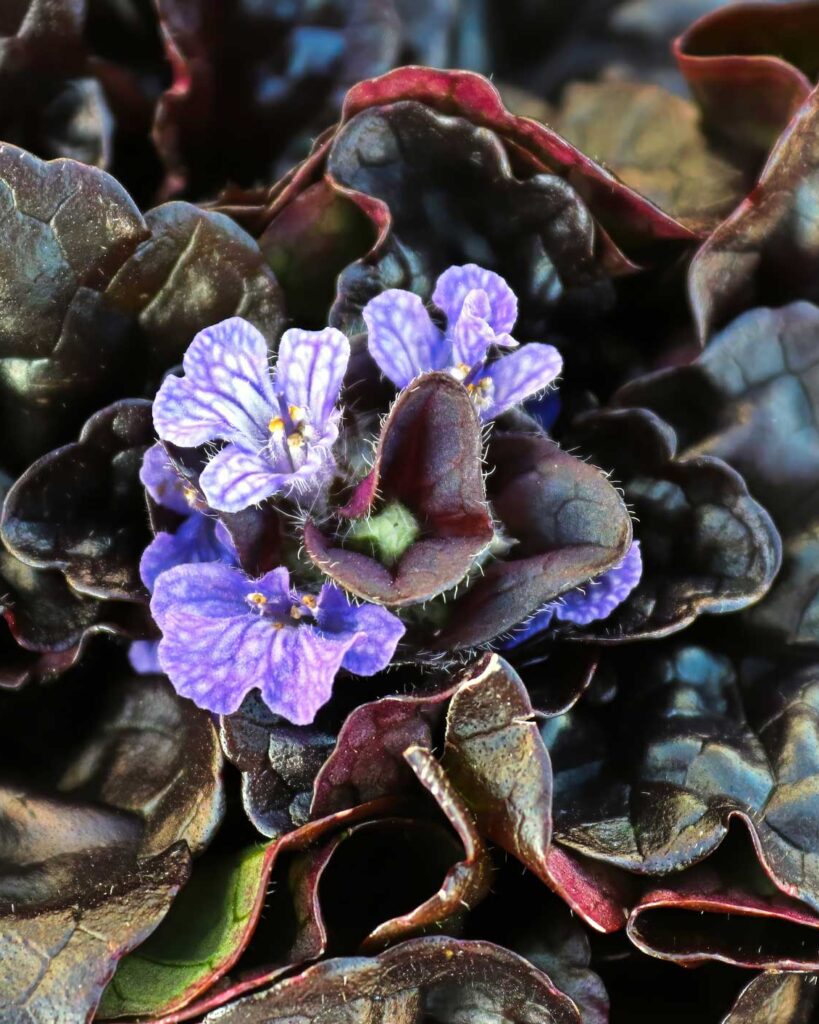
Ajuga ‘Black Scallop’ and ‘Bronze Beauty’
These low-growing groundcovers have deep purple-black leaves with a glossy sheen that reads almost like a living mulch. They’re fantastic for filling gaps along a path or the front of a border.
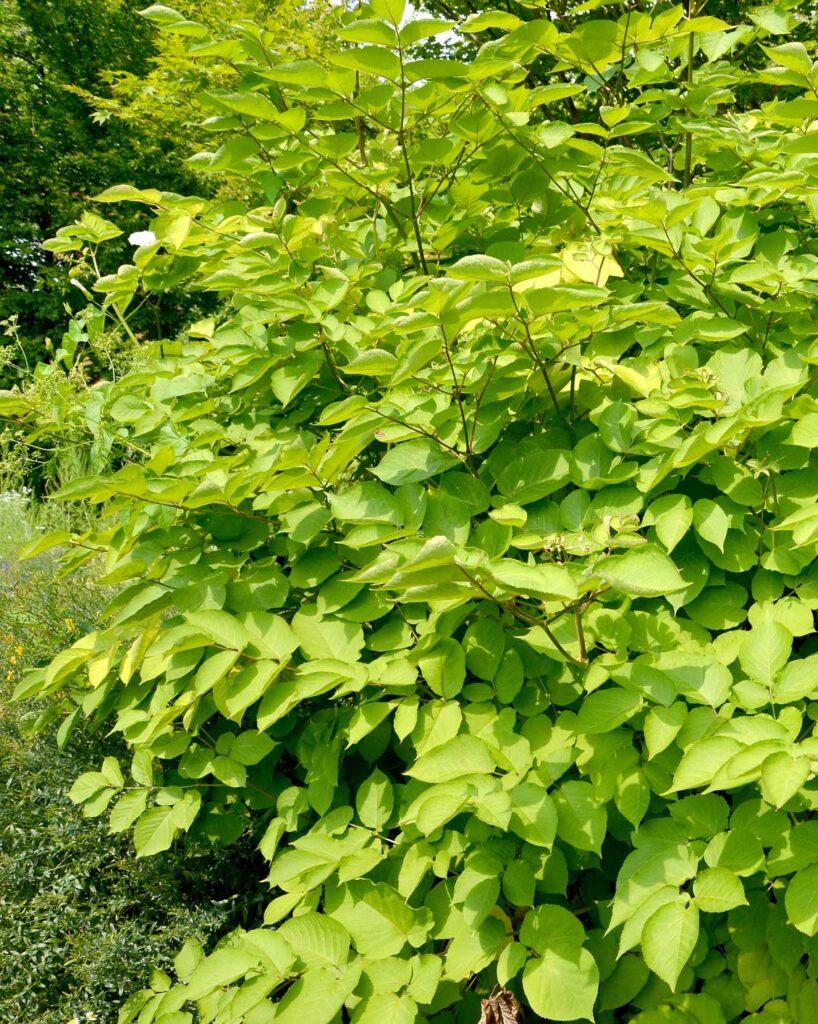
Aralia cordata ‘Sun King’
This one brings a chartreuse punch to a shade garden. The leaves practically glow, and it pairs beautifully with darker foliage nearby.
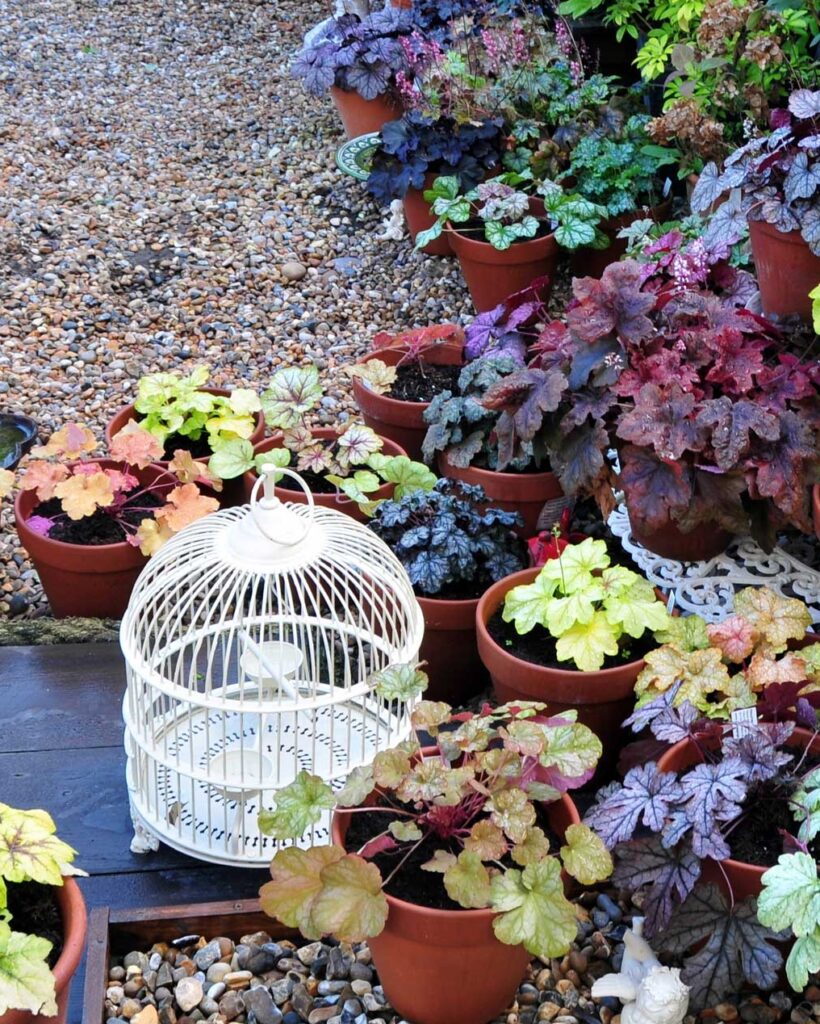
Heuchera
This is one of my absolute favorites when it comes to foliage plants for texture and color, and it deserves a longer conversation.
Heuchera comes in shades ranging from deep wine to caramel to lime, and several of the best varieties are native to the eastern US, including Dale’s Strain, Berry Smoothie, Caramel, and Citronelle.
Because Heuchera stays relatively compact and has such a tidy mounding habit, it’s one of the best perennials I recommend for container plantings. If you want a planter that looks good from April through November, combine two or three Heuchera varieties in different colors with a trailing element like creeping Jenny.
Give them well-drained soil and a bit of afternoon shade, and they will reward you with color that most flowering annuals can’t match.
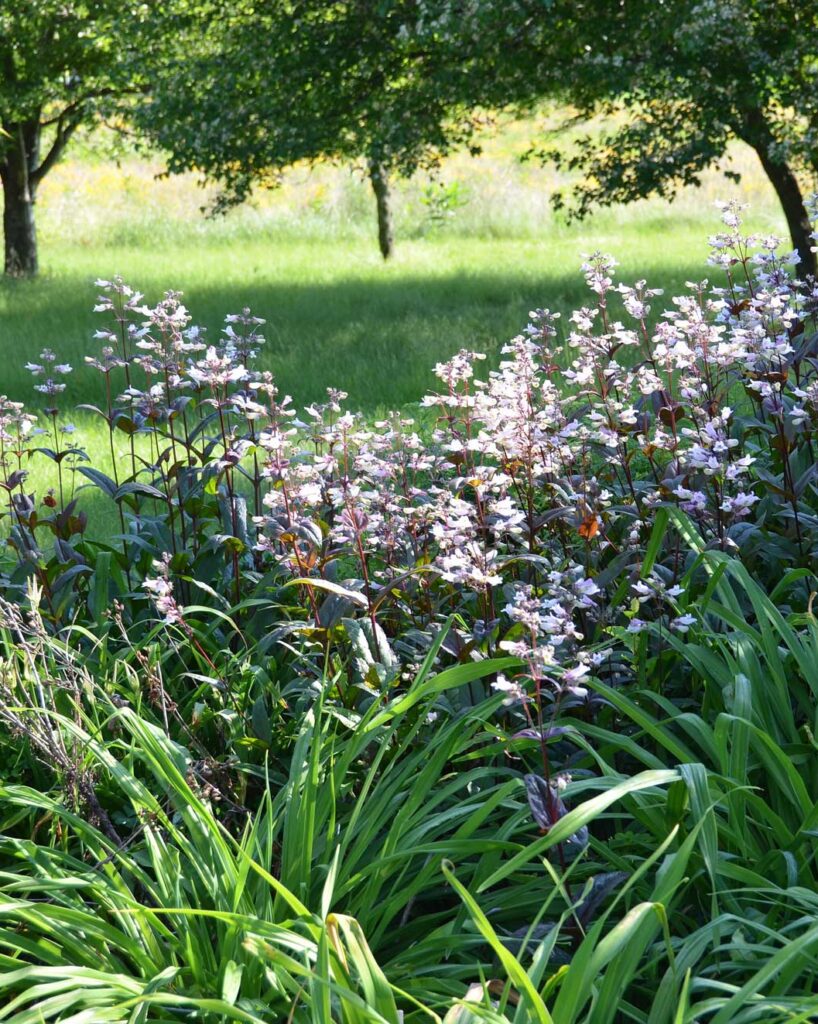
Penstemon ‘Dark Towers’
A native perennial with dusky purple foliage and an upright habit that adds real structure to a bed. The tubular flowers are a bonus, but the leaf color is why this plant earns its spot in the design.
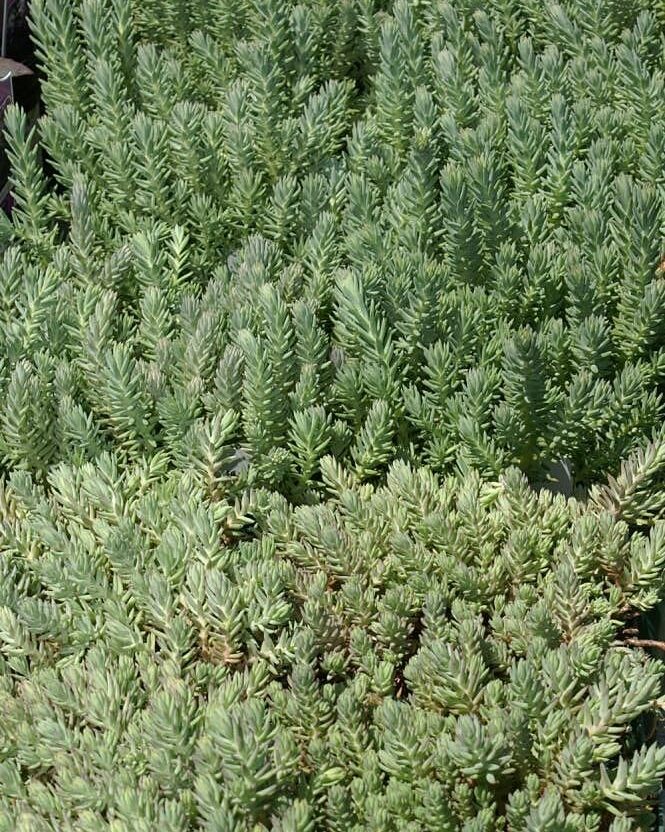
Sedum ‘Blue Spruce’, ‘Voodoo’, and ‘Ogon’
These low-growing sedums bring blue, near-black, and golden foliage into the mix. They’re drought tolerant, low maintenance, and ideal for edging a sunny bed or filling in rock garden pockets.
Variegated Leaves for Instant Brightness
Variegated leaves are one of the easiest types of foliage plants for texture to use when you want to brighten a shady spot that might otherwise feel flat.
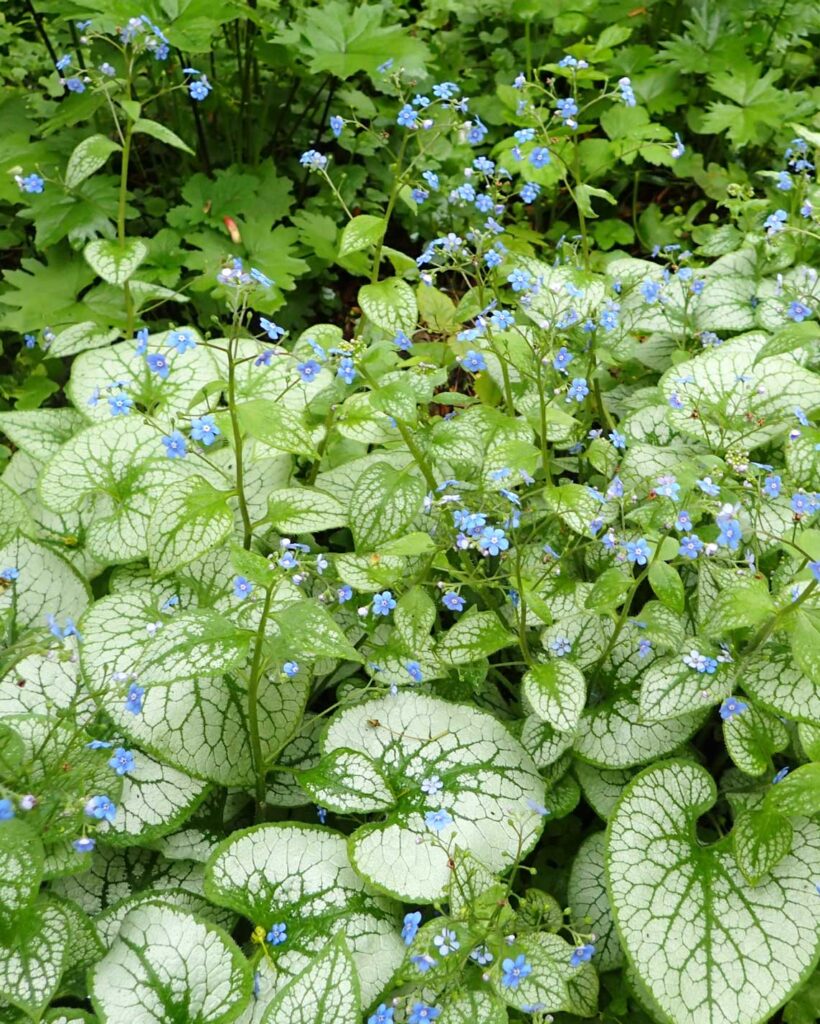
Brunnera ‘Jack Frost’
The silvery, frosted leaves with green veining make this one of the most reliable brighteners for a shade garden. It looks like it’s catching light even on an overcast day.
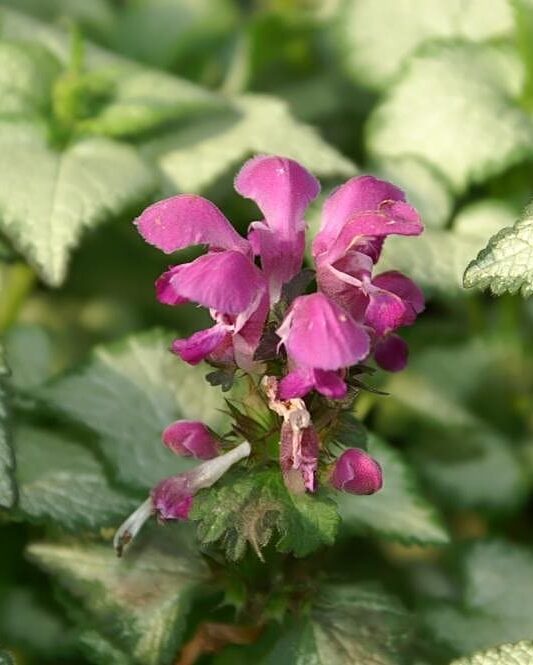
Lamium ‘Purple Dragon’
A groundcover with silver-centered leaves and deep purple flowers. It spreads nicely without becoming a problem, which makes it a great filler under trees or shrubs.
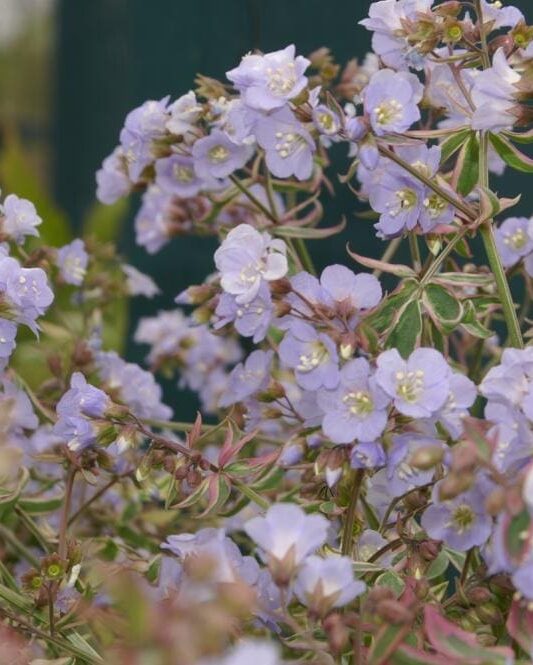
Polemonium ‘Stairway to Heaven’
This native perennial has cream and green variegated foliage with a soft pink blush on new growth. It’s a wonderful woodland plant that pairs well with ferns and hostas.
Types of Foliage Plants that add Texture to DC Gardens
Texture is what makes a garden feel alive. Fine, feathery foliage next to something bold creates a rhythm that draws the eye through the whole bed.
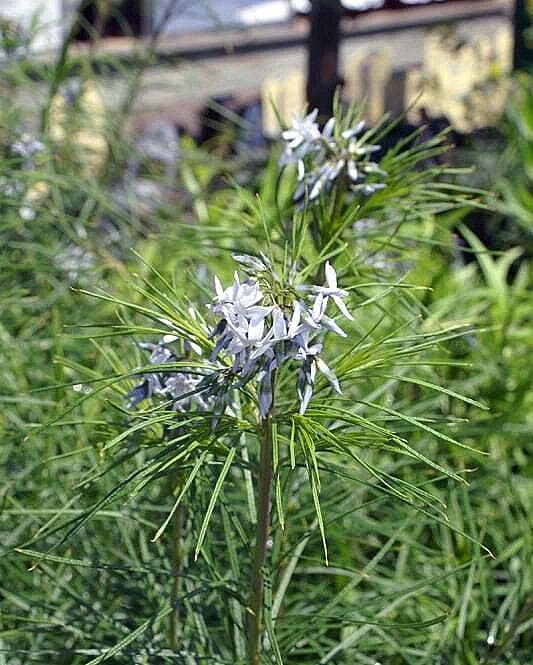
Amsonia hubrichtii
A native perennial with thread-like foliage that turns a stunning golden yellow in fall. It has a soft, cloud-like presence in the garden during the growing season and puts on a real show as the seasons change.
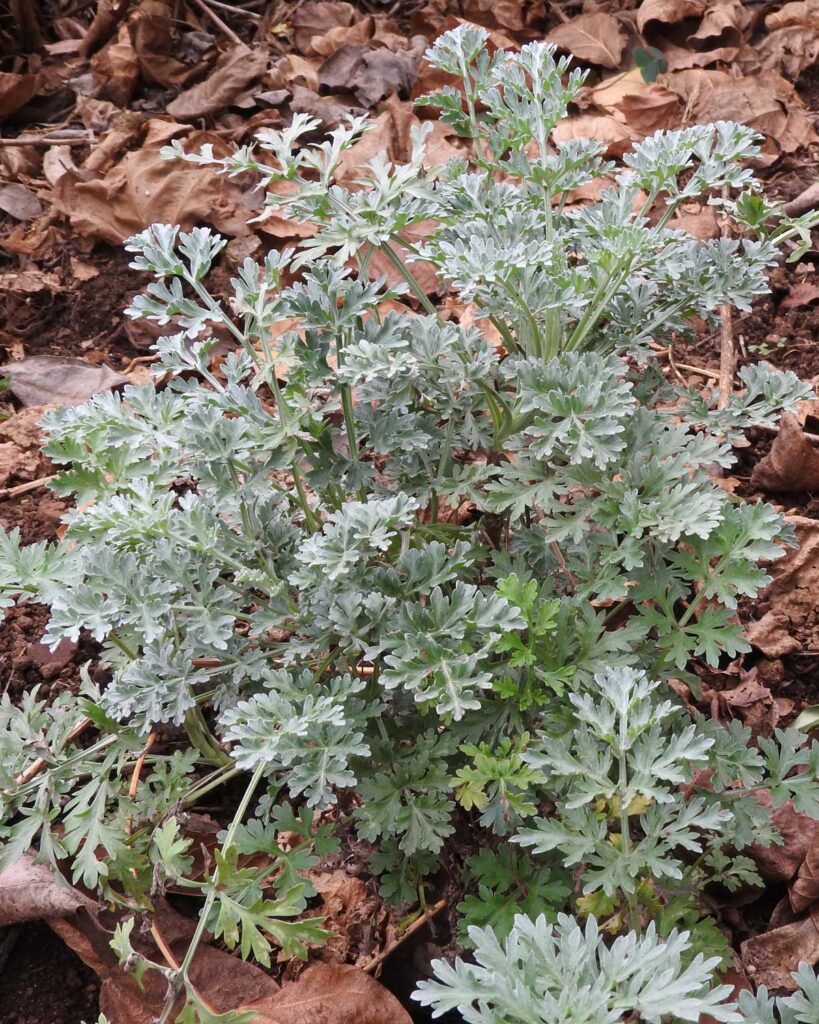
Artemisia ‘Powis Castle’
Silvery, finely cut foliage that softens harder edges in a design and pairs beautifully with almost anything nearby.
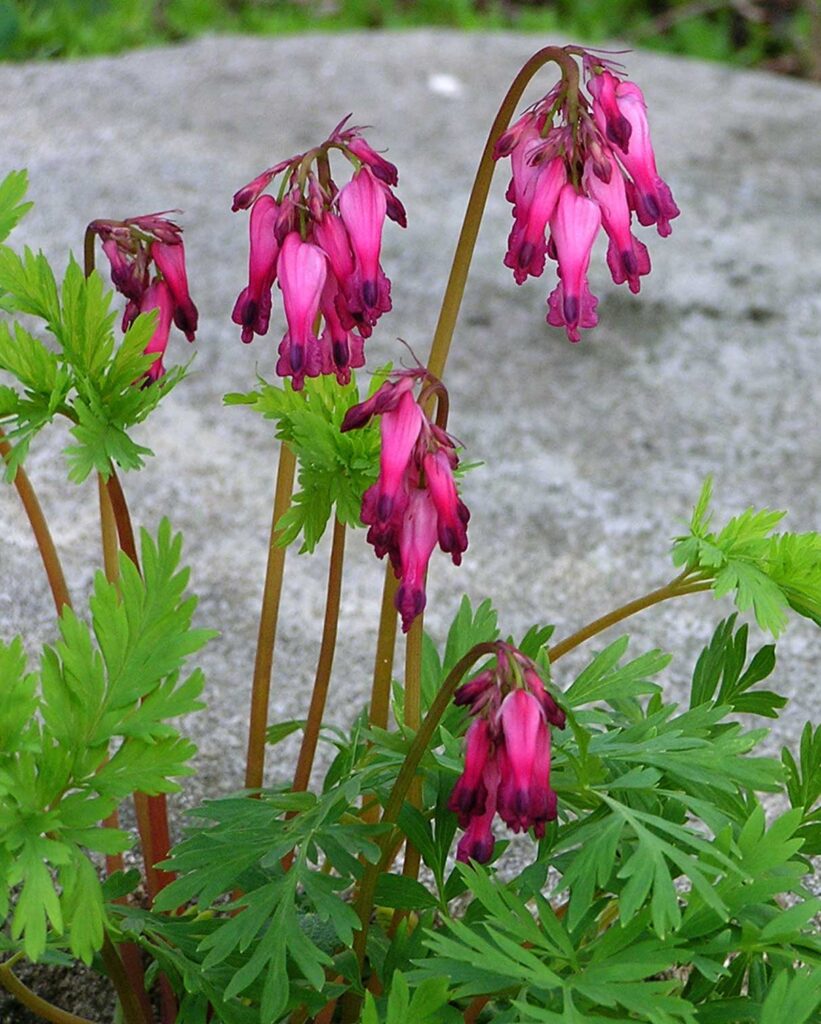
Dicentra eximia
This native fringed bleeding heart has delicate, fern-like blue-green foliage that stays attractive all season, even after the blooms are finished.
Bold Leaves for Drama and Structure
Sometimes a garden needs a plant that anchors the space, and bold foliage does exactly that.
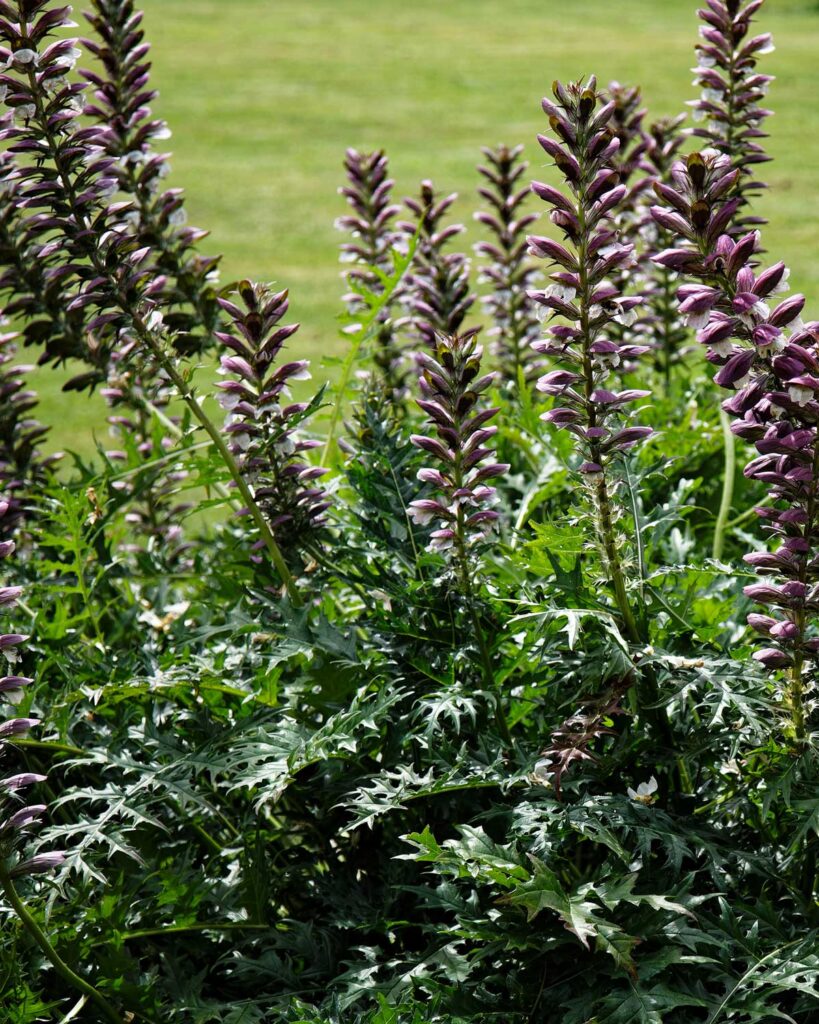
Acanthus
Large, deeply lobed, glossy leaves give this perennial serious presence. It works well as a focal point or repeated along a border for a formal, architectural feel.
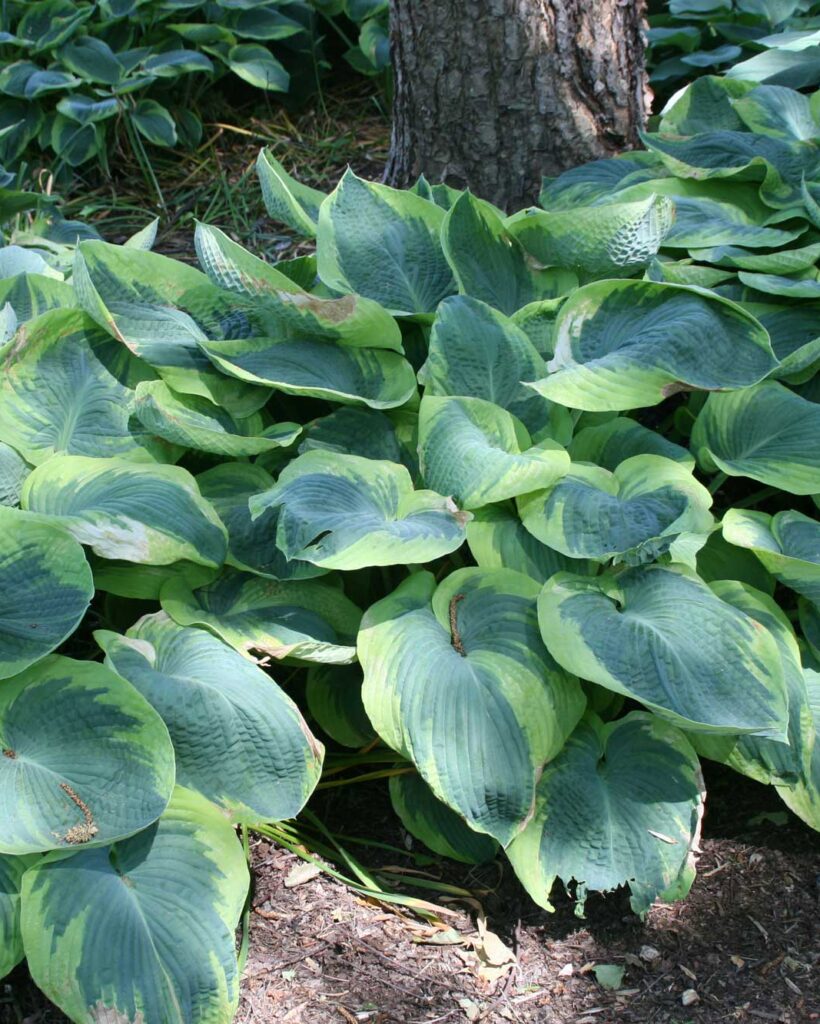
Hostas
No shade garden is complete without a few well-chosen hostas. My go-to varieties are Blue Angel, Frances Williams, Empress Wu, and Shadowland. Each one brings a different scale and color variation, from the enormous blue-green leaves of Empress Wu to the striking gold-and-green edges of Frances Williams.
Choosing the Right Foliage Plants for Your Garden
A garden built with a mix of the right types of foliage plants for texture is a garden that holds its own in every season. By combining color, variegation, texture, and bold leaf shapes, you get layers of interest that make a bed feel intentional and rich, even in the quiet stretches between blooms. If you’re ready to reimagine your perennial beds with foliage that actually earns its keep, reach out and let’s talk about what would work best for your space here in the DMV.
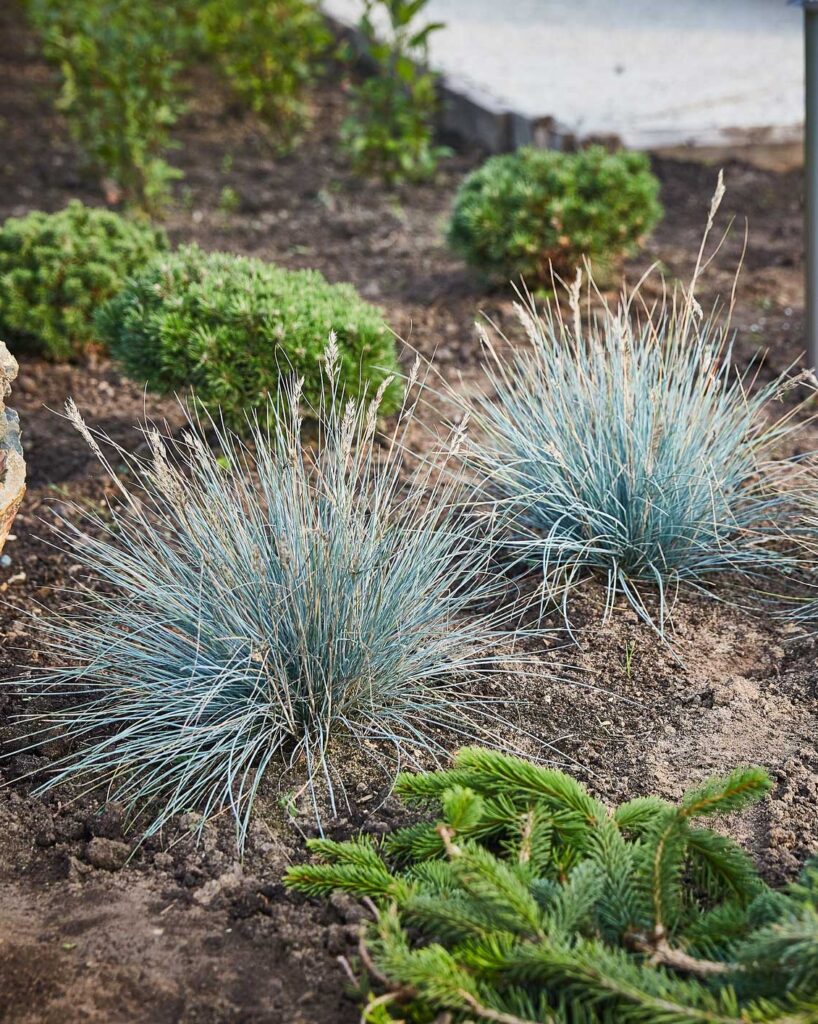
Curious About More Ways to Add Texture to Your Yard?
Check out our blog post featuring our favorite greenery to add texture and dimension to your yard.

I’m a Chevy Chase, DC-area landscape designer with 3 kids and 2 dogs that always keep me on my toes. Nature has always been a part of my life and as a child, I spent countless hours in the garden alongside my mother, learning the rhythm of the seasons and the joy of nurturing a living space. Now, I continue to find inspiration in the beauty of nature.
I founded Lanier Landscapes in 2013 after noticing how many outdoor spaces felt impersonal — beautiful but lacking warmth, functional but uninspired. I’m here to help you create an outdoor space that you can’t wait to come home to.
