
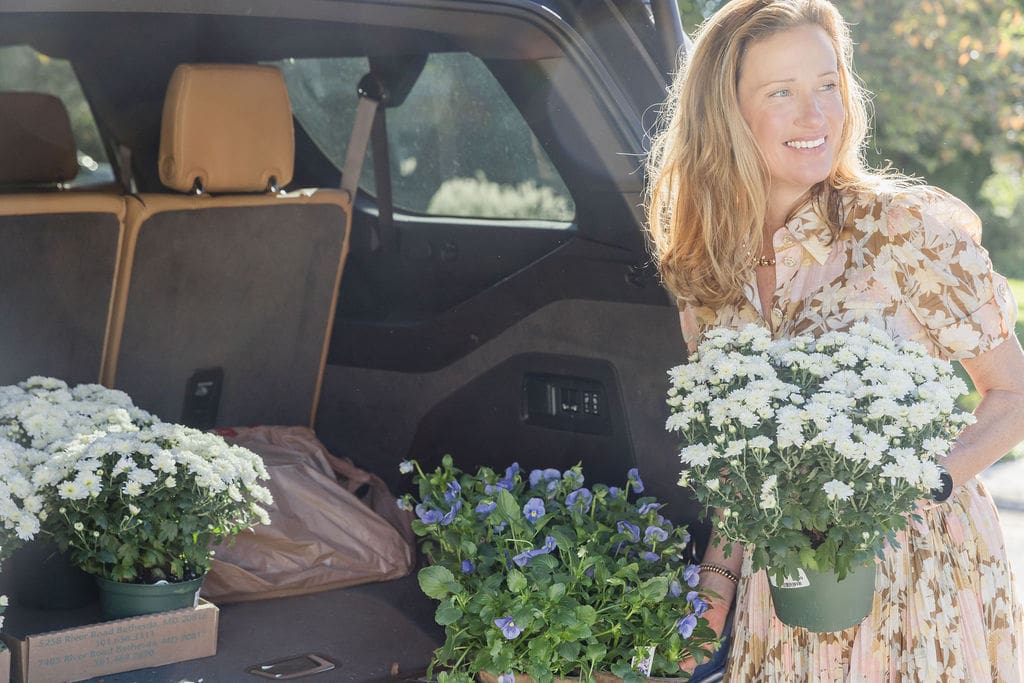
When people ask me where to begin with a more eco-friendly home, I tell them to start with what they already own.
A lot of eco-friendly tips for beginners you’ll find online often involve buying something new, but some of the most effective changes can (and should) cost nothing at all. To address this topic, I teamed up with my good friend Karen Jacob, who shares practical sustainable living ideas of her own, to put together a list that covers the yard, the kitchen, and the rest of the house. I’ll take the outdoor tips, and she’ll walk you through the indoor ones.
Here’s the short version before we dig in.
Eco-Friendly Tips for Your Yard
1. Leave the Leaves
Fall cleanup habits are among the hardest to break, but they’re also where you can make the biggest difference with the least effort.
Leaving a layer of leaf litter can provide a winter home for native bees, butterflies, moths, and fireflies, many of which spend the cold months tucked into leaves and hollow stems. Clearing everything away just means you’ll end up clearing out next year’s pollinators along with it.
Leaving some fall leaves in your yard can also do a lot work for your soil. As the leaves break down, they add organic matter, which helps the ground hold moisture so your plants cope better when summer turns dry.
You don’t need to leave your entire lawn buried. Rake the leaves, leave a few, and spread some across your garden beds and around the base of trees and shrubs. Even easier? Move over a light layer and the shredded pieces will settle in and feed the soil.
2. Replace even one plant with a native
You don’t need to redesign your entire landscape to support local wildlife. Swapping even a single plant for a native species gives insects and birds something they can truly enjoy. As a Chevy Chase landscape designer, I see how much difference one well-chosen plant makes, especially when the neighbors start doing it too.
Before you buy anything, look at what you have. Many native perennials can be divided in spring or fall, and a friend or neighbor may be happy to share a clump. Local native plant swaps and seed exchanges are another good source. Fall is also an excellent planting window in our area, since cooler air and warm soil help roots settle in before winter.
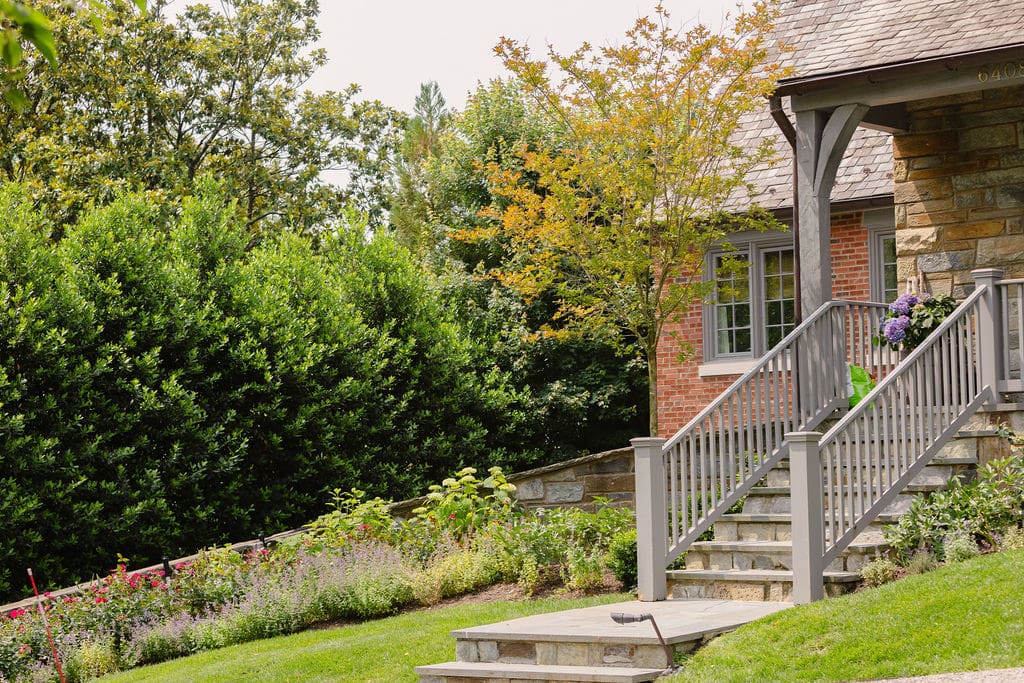
How Fall Planting Can Create a Thriving Garden
3. Get started with composting
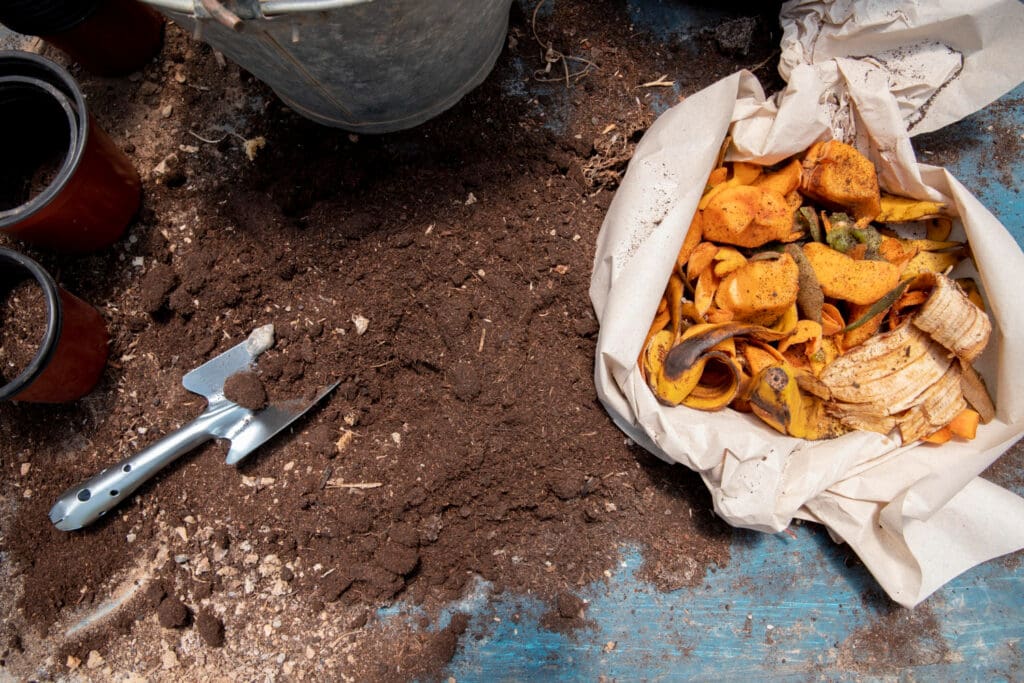
Composting is simpler than its reputation suggests. Pick a corner of the yard, build a loose pile or set up a basic bin, and add a mix of greens (fruit and vegetable scraps, coffee grounds) and browns (dry leaves, shredded paper, small twigs). Those fall leaves you saved make an ideal supply of browns. Give the pile a turn now and then, and in a few months you’ll have dark, crumbly compost for your beds.
Eco-Friendly Tips for Your Kitchen
4. Give food scraps a second life
Composting isn’t the only option for scraps. Vegetable trimmings and bones can be simmered into stock, stale bread can be made into breadcrumbs or croutons, and green onion ends will regrow in a glass of water on a windowsill. If a backyard pile isn’t practical, check whether your city or county offers a food scrap drop-off or pickup program, there are many in the DC area!
5. Cut back on single-use plastics
Cutting back on single-use plastics is quicker and easier than you might think.
Start by using up the containers, bags, and bottles already in your cupboards, and reuse takeout containers and jars before recycling them. Carrying a refillable water bottle and a set of utensils cuts out a surprising amount of waste, and saying no to a straw or extra packaging costs you nothing.
6. Use reusable produce bags
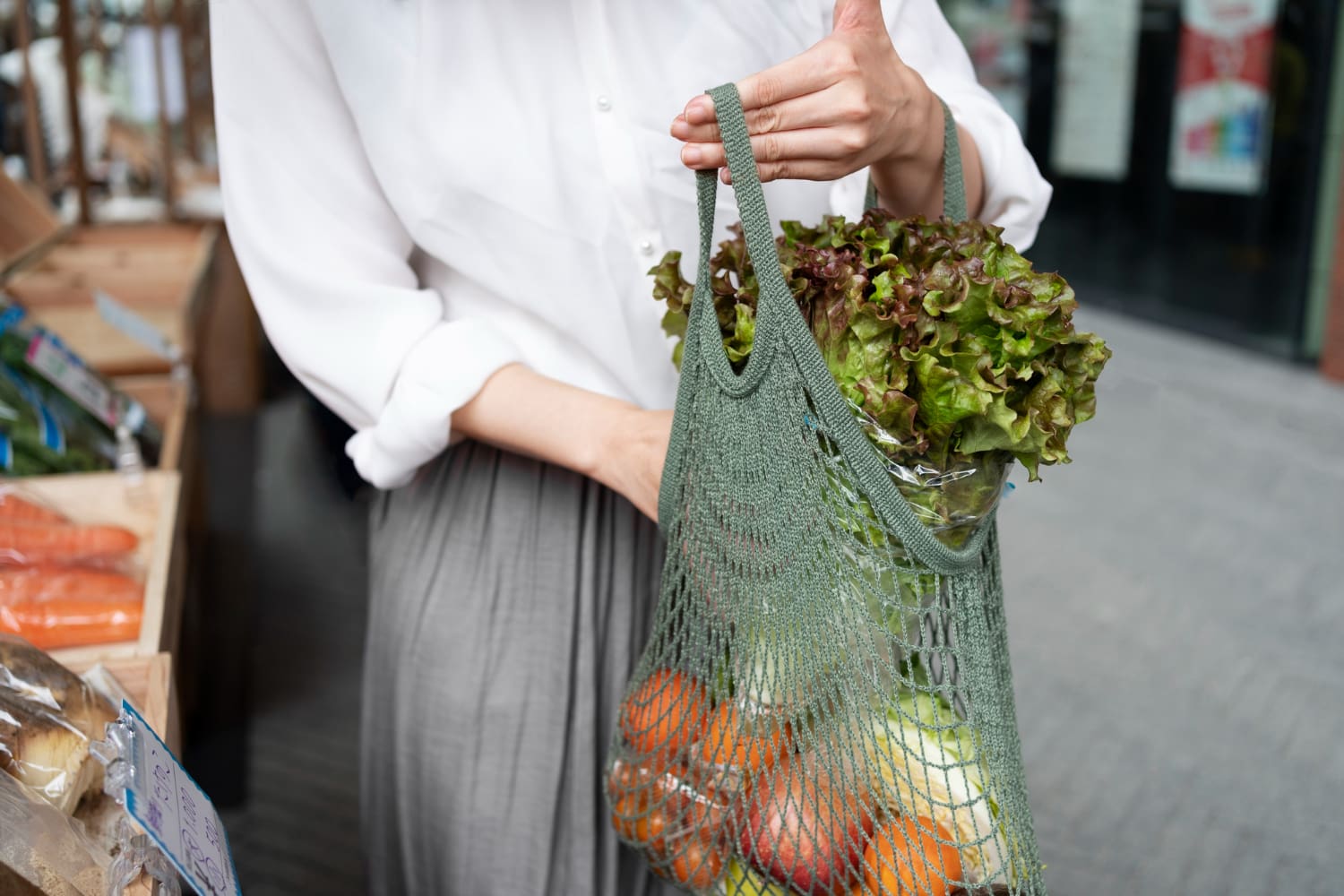
The thin plastic bags at the grocery store are easy to skip. Many fruits and vegetables don’t need a bag at all, and for the ones that do, a mesh bag works well. A cloth bag you already own is a great place to start before you purchase a new set.
Eco-Friendly Tips for Around the House
7. Switch to green cleaning supplies
Switching to green cleaning supplies is another eco-friendly tip for beginners that’s a lot easier than you think. Plain white vinegar and baking soda handle a lot of household cleaning, and you probably already have both in your home.
When you’re running low on laundry or dishwasher detergent, that’s a great time to try an eco-friendly formula, such as a plant-based, concentrated, or low-packaging option. But remember – the best way to be eco-friendly is to finish what you have before buying new so nothing goes to waste.
8. Turn down the lights to help wildlife
Outdoor lighting affects more than your electric bill. Bright lights at night can disorient migrating birds, pull moths and other insects away from the plants that need them, and interrupt the flashing patterns fireflies use to find each other. Turn off decorative and landscape lighting when you’re not using it, and where you need light for safety, choose warm-toned bulbs, aim fixtures downward, and consider a timer or motion sensor.
Easy Eco-Friendly Tips that Make an Impact
You don’t have to do all eight of the eco-friendly tips for beginners on this list. Pick the one that fits your schedule, whether that’s raking leaves into a bed or switching off the porch light, and build from there. Small habits tend to stack up, and a more eco-friendly home usually grows one easy change at a time.
If you’re thinking about bringing more native plants into your own landscape, I’d love to help. Reach out to start the conversation about a design that suits your property through every season.

I’m a Chevy Chase, DC-area landscape designer with 3 kids and 2 dogs that always keep me on my toes. Nature has always been a part of my life and as a child, I spent countless hours in the garden alongside my mother, learning the rhythm of the seasons and the joy of nurturing a living space. Now, I continue to find inspiration in the beauty of nature.
I founded Lanier Landscapes in 2013 after noticing how many outdoor spaces felt impersonal — beautiful but lacking warmth, functional but uninspired. I’m here to help you create an outdoor space that you can’t wait to come home to.
