
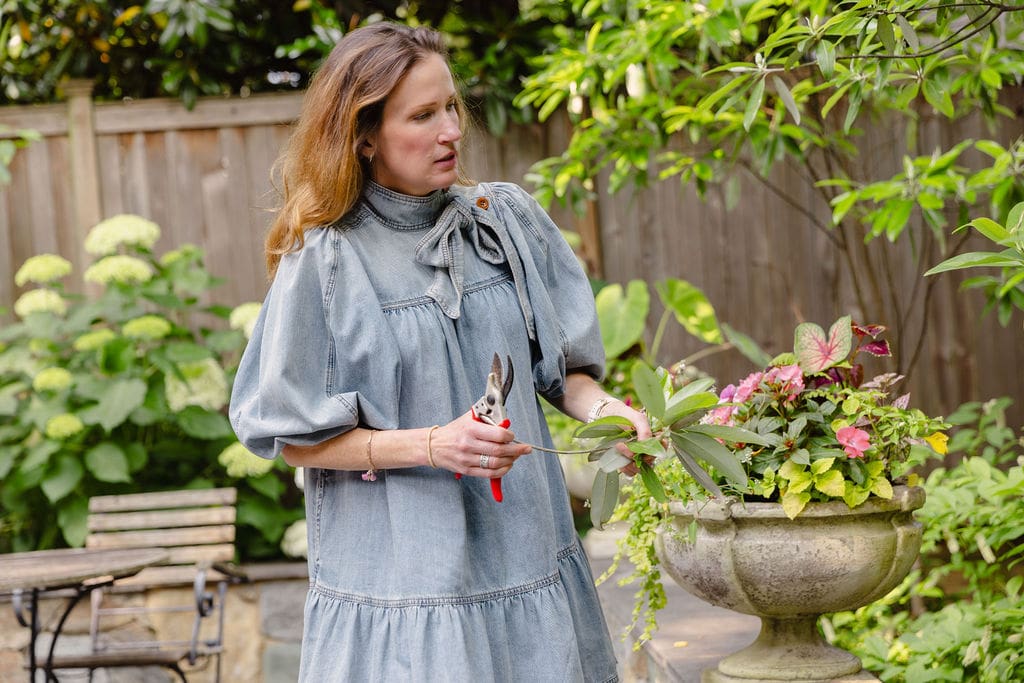
There’s a particular kind of spring magic that happens in late February and March in the DMV. When the days stretch a little longer, and the garden begins to stir in that slow, unhurried way it has…. A snowdrop pushes through the cold earth. The faintest blush of color returns to bare branches. The soil, still cool to the touch, hums with something like intention, as though all that winter rest was simply preparation for what’s coming next.
Your garden has been doing its quiet work all winter long. Resting, consolidating, building energy underground in whatever way plants build energy, and now? As the season tips toward spring, you’re probably feeling the pull to get out there and do something. To rake, cut, tidy, intervene.
We love that instinct, and we want to channel it well, because years of working in gardens across the DMV has taught us that the most powerful act of stewardship is restraint. Knowing what to do is only half the equation. Knowing what not to touch, and why, is where the real wisdom lives.
First, a Breath: Reading Your Garden Before You Begin
Before you pick up the pruners, walk your property slowly and just observe. What’s already stirring? Where are the first green tips emerging from the soil? What looks like dead wood but might simply be dormant, waiting?
Washington DC’s shoulder season is famously unpredictable. We can see 60°F days in February followed by a hard frost in April, and your plants have adapted to navigate that uncertainty in their own quiet way, which means you need to read them carefully before you act.
This observational walk is never wasted time, it’s the foundation of everything else you’ll do this season.
You’re looking for signs of life emerging from the soil (bulbs, perennials, ground covers waking up), evidence of winter storm damage like broken branches or heaved roots, which shrubs and trees are already swelling with buds (this tells you everything about timing), and areas where your winter mulch has shifted and needs correction.
Let that information guide everything that comes next, and resist the urge to start cutting before the picture is clear.
What You Can (and Should) Do Now to Prepare Your Garden After Winter
Spring cleanup doesn’t have to be cautious across the board. There are some tasks that benefit from early, decisive attention, and getting them done now sets the tone for the whole season ahead. Here’s what you can do now:
1. Cut back ornamental grasses
Before new growth emerges from the base, ornamental grasses should be cut down to about 4–6 inches from the ground. This is one of those satisfying, unambiguous spring jobs with a window that closes quickly once the new shoots appear, so it’s worth prioritizing early.
2. Prune summer-blooming shrubs
Plants that bloom on new wood like butterfly bush (Buddleia), crape myrtle, and most roses can, and should, be pruned in early spring. These plants develop their flower buds on the current season’s growth, so cutting them back now actually encourages more blooms later.
3. Tidy up perennial beds
Remove the papery remains of last year’s perennials (hostas, daylilies, coneflowers, and the like) being careful not to disturb any early bulb foliage emerging nearby. If you left seed heads standing through winter for the birds (which we love), now’s a good moment to clear them.
4. Refresh your mulch
A 2–3 inch layer of fresh mulch around your beds does triple duty: it retains moisture, moderates soil temperature during those wild spring temperature swings, and suppresses early weed germination. Pull mulch back slightly from plant stems and tree trunks as contact encourages rot and harbors pests.
5. Assess and aerate your lawn
Cool-season grasses in our region benefit from aeration in early spring when the ground is moist but not waterlogged. It’s also a good time to overseed thin patches before the heat of summer sets in.

The “Do Not Touch” List As You Prepare Your Garden After Winter
This is the section we’re most passionate about, because the heartbreak is so real and so preventable.
Every spring, well-meaning gardeners reach for their pruners and cut back a shrub that looks straggly or overgrown, not realizing that the very buds they’re removing are this year’s flowers. And then they spend all spring and summer waiting for blooms that simply never come… sad, right?
The reason comes down to a concept called old wood blooming. These plants set their flower buds during the previous summer and fall, and those buds have been sitting patiently on last year’s stems all winter, waiting for their moment. When you prune them in spring, even with the best intentions, you’re cutting away an entire season of flowers before they ever had the chance to open.
Write this list somewhere prominent. Tape it to your garden shed. Set a reminder. Whatever it takes.
1. Hydrangeas (Bigleaf & Oakleaf varieties)
Hydrangeas are perhaps the most commonly over-pruned plant in the DMV, and it’s an easy mistake to make. Those bare, twiggy canes in early spring genuinely do look like candidates for removal. But bigleaf hydrangeas (Hydrangea macrophylla), the classic mopheads and lacecaps in shades of pink, blue, and purple, and oakleaf hydrangeas (Hydrangea quercifolia) both bloom on old wood, meaning those gnarled, seemingly lifeless sticks are full of bud potential just waiting for warmer temperatures.
The rule: Do not prune bigleaf or oakleaf hydrangeas in spring. If you feel compelled to tidy things up, wait until the plant has leafed out so you can clearly distinguish dead wood from dormant-but-alive canes, then remove only what is actually dead. One important note: if you have Annabelle hydrangeas (Hydrangea arborescens) or panicle hydrangeas (Hydrangea paniculata), those bloom on new wood and can absolutely be pruned in early spring, sometimes quite hard.
2. Dogwood Trees
Flowering dogwoods (Cornus florida) are one of the most beloved trees in our region, and their early spring show is one of the defining images of the season in Washington DC. What most people don’t realize is that those flower buds are currently sitting fat and round on the tips and branches of your tree, having developed since late summer, and a well-intentioned spring pruning removes exactly what you’ve been waiting all winter to see.
Beyond bloom timing, spring is also a particularly vulnerable window for dogwoods. Fresh cuts made while the tree is putting all its energy into flowering expose it to dogwood anthracnose and other fungal issues that thrive in the cool, wet conditions of early spring. The rule: if pruning is needed, do it in late summer or very early fall, after the tree has flowered and fully leafed out, and well before it begins setting next year’s buds.
3. Lilacs
If you have a lilac in your garden, you know the lovely scent that arrives for just a few weeks every spring, stopping you mid-stride every time you step outside. Lilacs bloom on old wood, with their flower buds set on growth from the previous season, which means a spring-pruned lilac is simply a lilac that won’t bloom this year. There’s no workaround, no partial exception. Removing that old wood removes the flowers completely.
The rule: Prune lilacs immediately after they finish blooming, within the few weeks following their flowering. This gives the plant the entire growing season to set buds for the following year, and it’s the only timing that doesn’t cost you a season of blooms. Pruning in late summer, fall, or spring all result in the same outcome, a flowerless display.
4. Ornamental Cherry Trees
Whether you have a Yoshino cherry, a weeping cherry, or any of the dozens of ornamental varieties that make Washington DC internationally famous in spring, they’re all relatively the same. Cherry blossoms form on old wood from the previous season’s growth, and those delicate, fleeting clouds of pink and white you’re anticipating are already in the branches you might be considering cutting back right now.
There’s also a practical concern beyond bloom timing. Pruning cherries and other stone fruits in late winter or early spring makes them vulnerable to bacterial canker and other diseases that enter through fresh cuts when conditions are wet and cool — which, in the DMV, describes early spring fairly reliably. The rule: prune ornamental cherries in late spring or summer, after they’ve finished flowering, when the wood is actively growing and the plant can seal pruning wounds efficiently.
5. Azaleas
Azaleas are a cornerstone of the DMV spring garden, their brilliant pinks, reds, and whites practically synonymous with the season, and like their rhododendron cousins, they set their flower buds in the fall on growth from the previous summer. Pruning an azalea in early spring doesn’t harm the plant’s long-term health, but it will cost you this year’s bloom entirely, and given that most azaleas have a relatively short but absolutely spectacular flowering window, losing even one season is a genuine disappointment.
The rule: Prune azaleas within 4–6 weeks of their flowering finishing, usually by late May or early June in our region. This is the golden window, and it doesn’t stay open long. After that, the plant begins directing energy toward next year’s buds, and any pruning done from midsummer onward starts to eat into next season’s display.
5. Camelias
Camellias are a study in patience, and spring is the season that tests that patience most. If your camellia looks ragged right now, the instinct to grab the pruners is completely understandable. Resist it. Unless you’re dealing with genuinely broken or dead branches, put the pruners down and walk away.
Like azaleas, camellias set next year’s flower buds on the current season’s new growth, which means any significant pruning done while the plant is actively growing or budding comes directly out of next spring’s display. Early spring pruning is particularly costly because the plant has already burned its stored energy pushing out new growth, and cutting now forces it to start over, leaving you with a tidier shrub and a nearly flowerless winter.
The rule: Prune camellias immediately after flowering finishes. This brief post-bloom window is your one clean shot at shaping the plant without sacrificing next year’s show.
The Deeper Practice: Presence Over Productivity
Here’s what we’ve noticed after years of working in gardens across Washington DC, Bethesda, Chevy Chase, and beyond: the gardens that feel the most alive, the most genuinely beautiful, are tended by people who’ve learned to be present with their plants rather than reactive to them.
Each plant has a relationship with time that’s genuinely worth understanding. When you learn that your lilac is already carrying next spring’s flowers by August, it changes how you look at it in midsummer. It stops being a shapeless green blob and starts being something actively, quietly preparing.
Ready for Support This Season?
Spring is one of the busiest and most consequential windows in the garden year. Whether you want a professional eye to assess your property, help with spring cleanup and mulching, or are dreaming of a full landscape refresh that works with your existing trees and shrubs rather than against them, we’d love to be in your corner.
At Lanier Landscapes, we specialize in creating outdoor spaces that feel alive in every season. We specialize in creating spaces that are planned with the full annual life of your plants in mind, so that nothing is left to guesswork.
Get in touch to tell us what your garden needs this spring. We’d love to walk it with you!

I’m a Chevy Chase, DC-area based landscaped designer with three children and two dogs that keep me on my toes. Nature has always been a part of my life. As a child, I spent countless hours in the garden alongside my mother, learning the rhythm of the seasons and the joy of nurturing a living space. Now, I continue to find inspiration in the beauty of nature.
I founded Lanier Landscapes in 2013 after noticing how many outdoor spaces felt impersonal — beautiful but lacking warmth, functional but uninspired. I’m here to help you create an outdoor space that you can’t wait to come home to.

This!! The Deeper Practice: Presence Over Productivity-so beautiful and should be carried into all of life. We moved into a new house in January and Ive been so anxious to see what awaits in the garden. This was just what I needed to read to put the shears down and see what the year shows me. Cant wait for you to see it!