
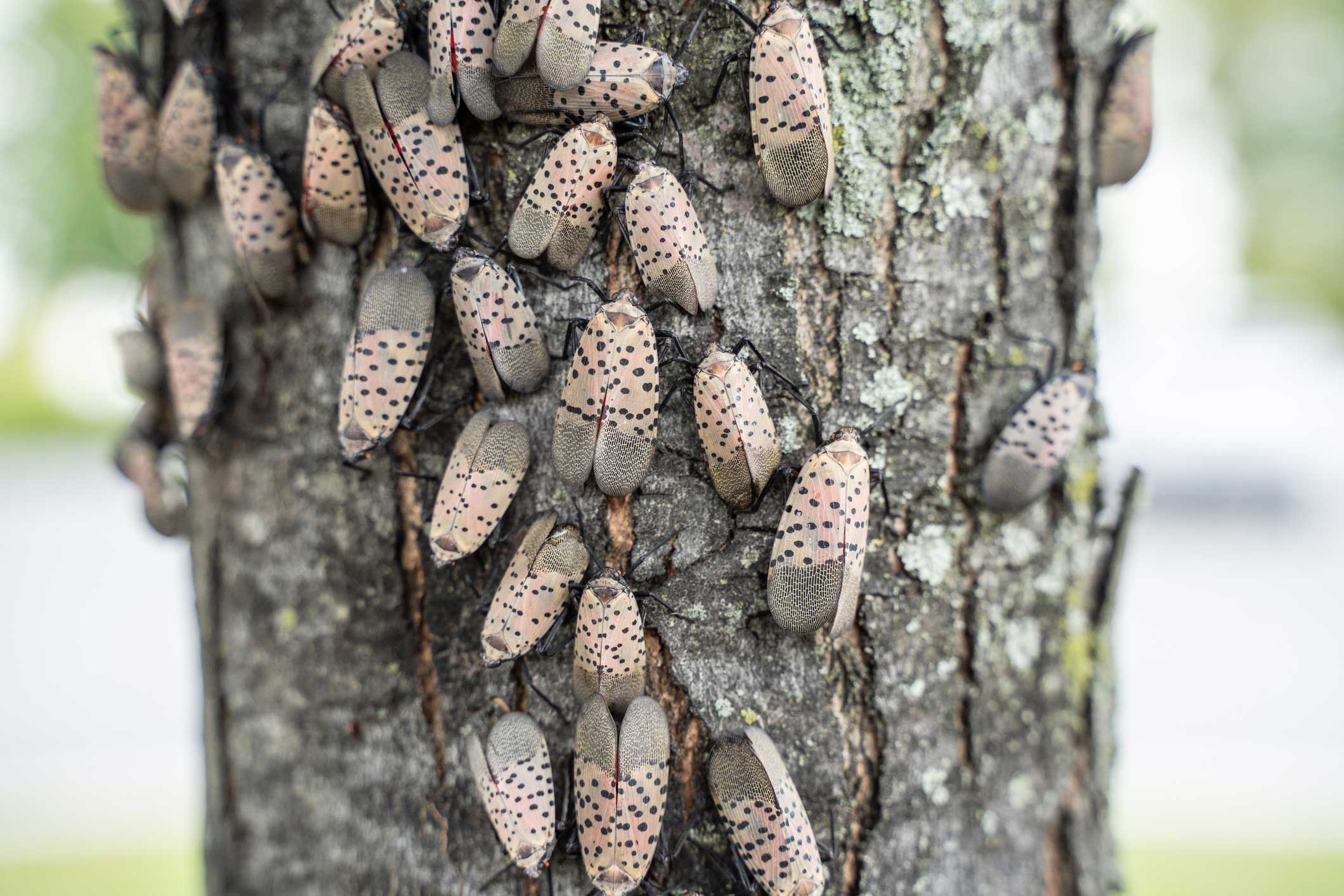
Last summer I’d spot a handful of spotted lanternflies a week in my garden. This summer? I’m counting 20 or more a day just around my fig tree!
The increase of spotted lanternflies has exploded across the DC and Mid-Atlantic region, and your yard is probably next on their menu, so let’s talk about what these things actually are, why they’re such a problem for our gardens, and exactly what to do when you find a spotted lanternfly on your property.
What is a Spotted Lanternfly?
Spotted lanternflies are plant-hoppers, not true flies, and they’re not native to the US. They showed up in Pennsylvania back in 2014 after arriving from Asia, and they’ve been spreading through the Mid-Atlantic ever since.
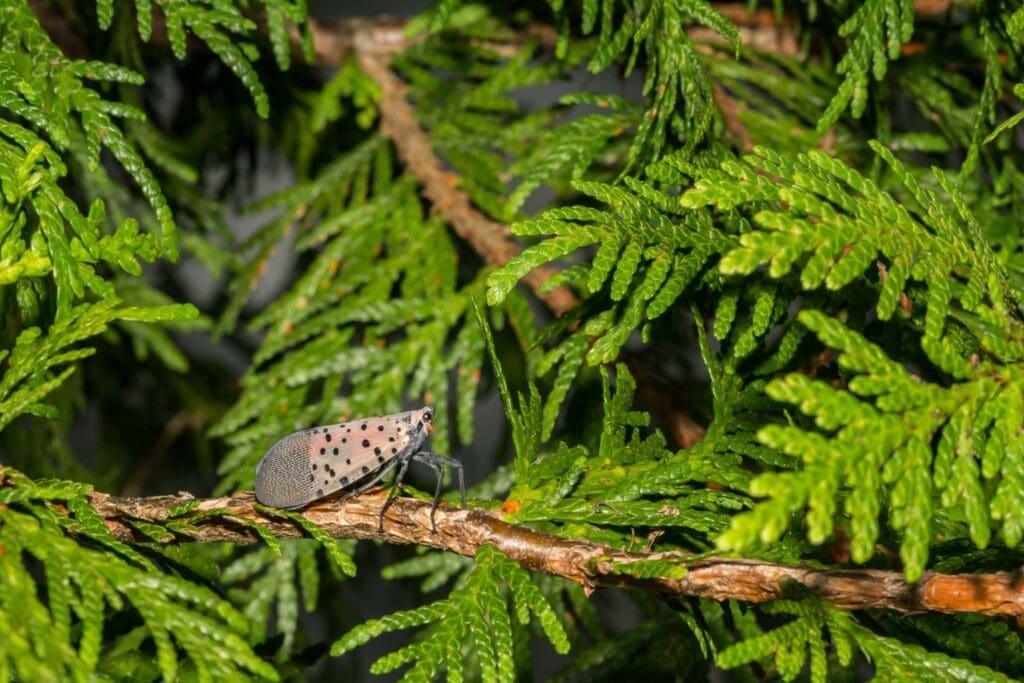
They’re easy to spot once you know the look: gray wings dotted with black spots, and a flash of red underneath when they take off.
Here’s an important piece of good news right up front. Spotted lanternflies don’t eat other bugs. They’re not hunting your ladybugs or your bees. Instead, they have specialized straw-like mouthparts built for one job: piercing plant tissue and drinking the sap out of it.
Does a Spotted Lanternfly Cause Harm?
The problem with spotted lanterflies isn’t predation. It’s the sheer damage they do to plants by feeding in massive groups.
A single lanternfly isn’t much of a threat, but a swarm of them draining sap from your maple, your grapevine, or your fig tree is another story entirely. They target more than 70 plant species, and heavy infestations stress trees enough to weaken or even kill them over time.
On top of that, they leave behind a sticky, sugary waste called honeydew. This coats leaves, patios, and outdoor furniture, and it grows a black, sooty mold. That honeydew also attracts other nuisance insects like wasps, yellow jackets, and ants, so one lanternfly problem tends to invite more problems.
The good news? Some local wildlife has started fighting back. Spined soldier bugs, wheel bugs, spiders, and even certain birds like the eastern red bat have been documented eating them. Nature is adapting, but it’s not adapting fast enough to keep up with the population boom most of us are seeing right now.
What to Do When You Find a Spotted Lanterfly
If you’re standing in your yard wondering what to do when you find a spotted lanternfly, here’s the short version:
Kill it on sight, check for eggs in the colder months, and use traps that protect other wildlife.
But there’s a right way and a wrong way to do each of these, and getting it right makes a real difference for the birds, bees, and beneficial bugs sharing your yard. Stick with me through the identification and removal sections below, because knowing which life stage you’re looking at changes how you should handle it.
How To Identify Spotted Lanternflies At Every Stage
Spotted lanternflies look pretty different depending on the time of year, which trips a lot of people up.
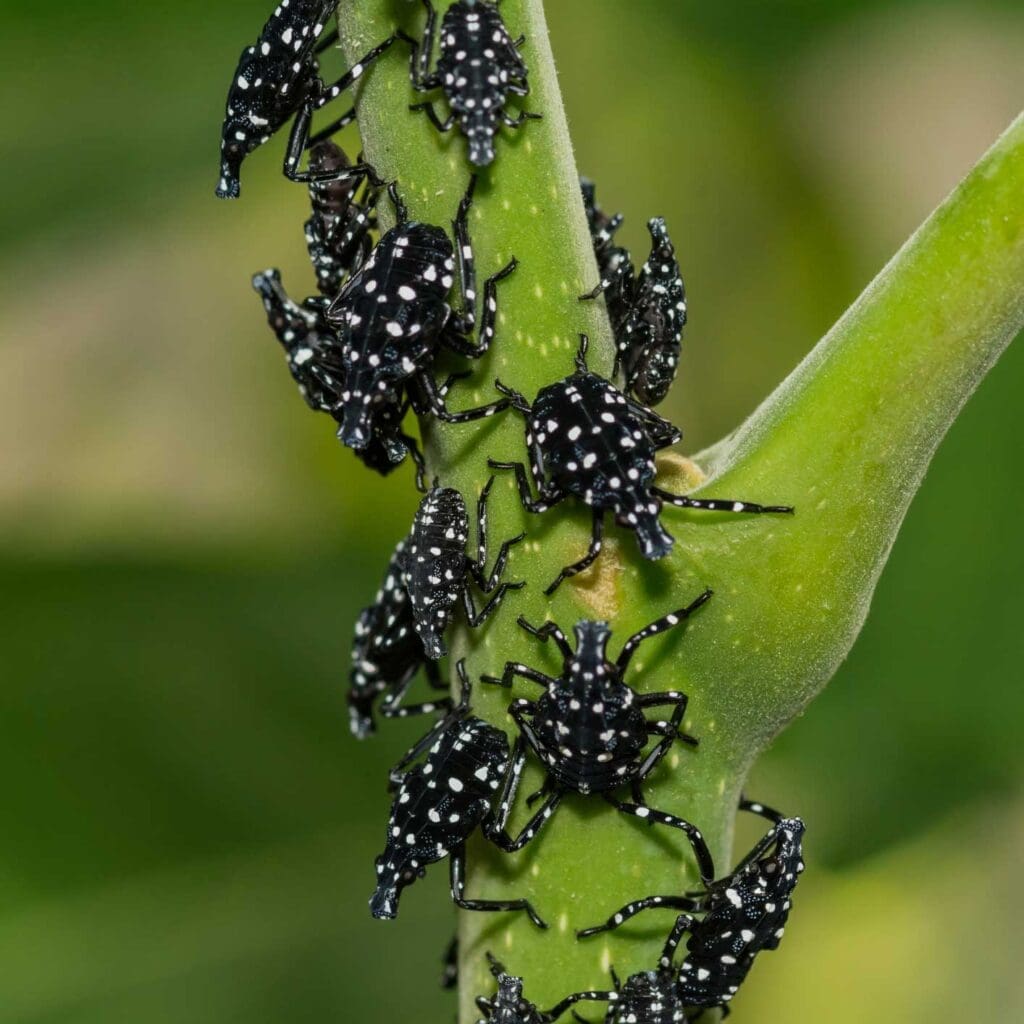
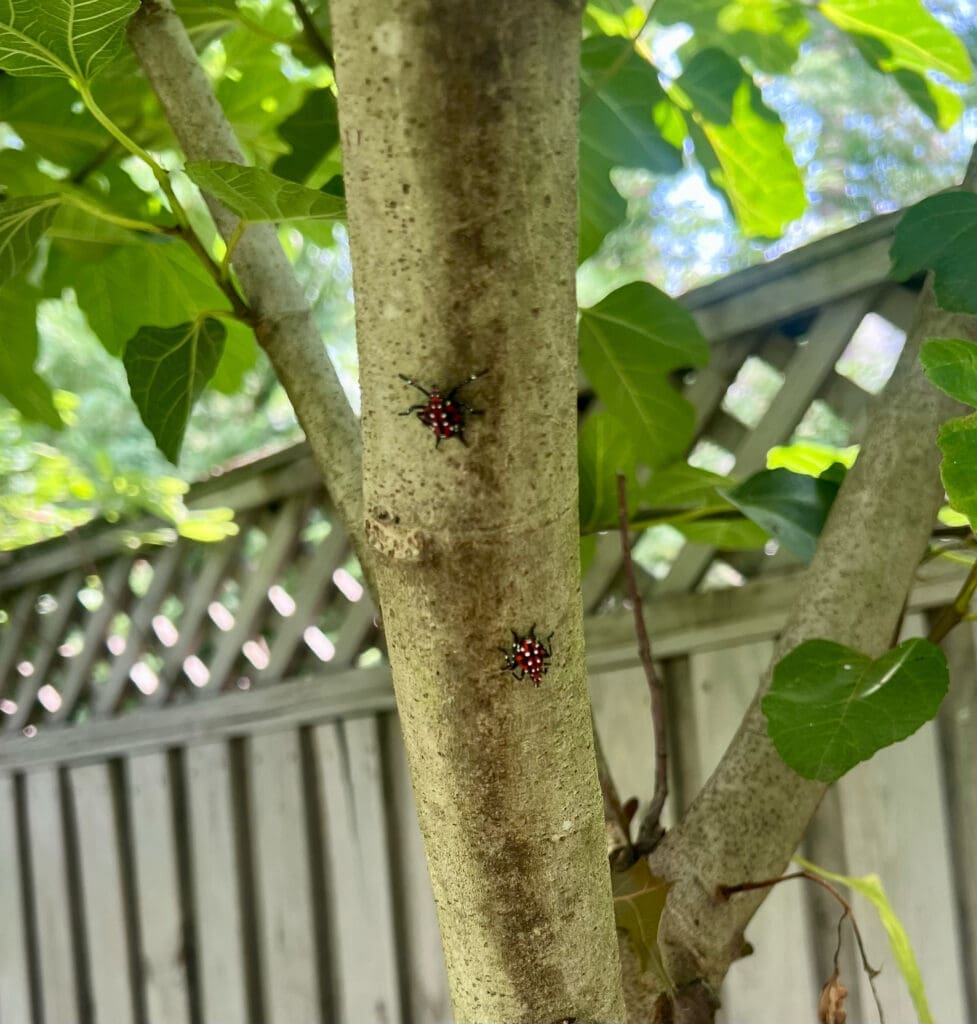
Early nymphs (spring into early summer): Small, black, and covered in white spots. At a glance, people often mistake them for large ticks or beetles.
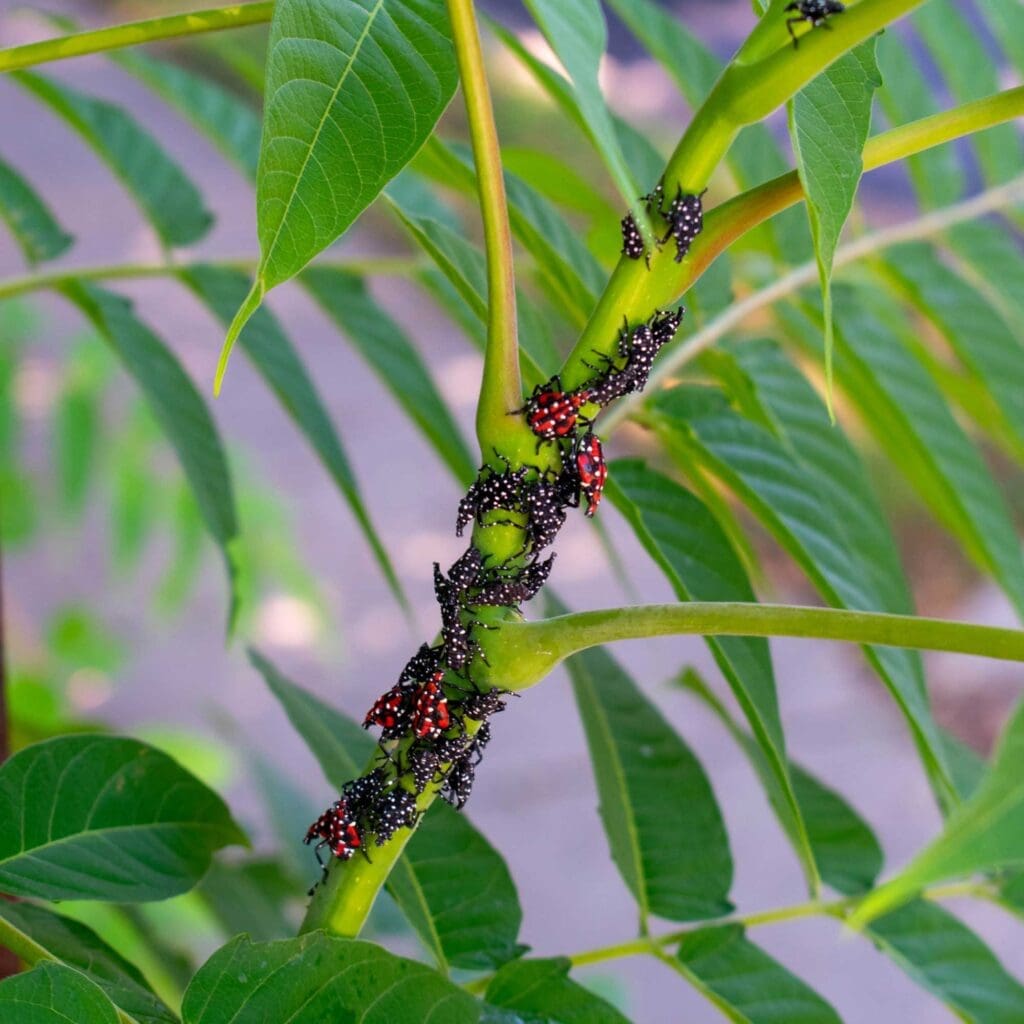
Late nymphs (mid to late summer): This is the stage where they start turning red, keeping the white spots and adding black markings. This is usually when homeowners start noticing them in bigger numbers.
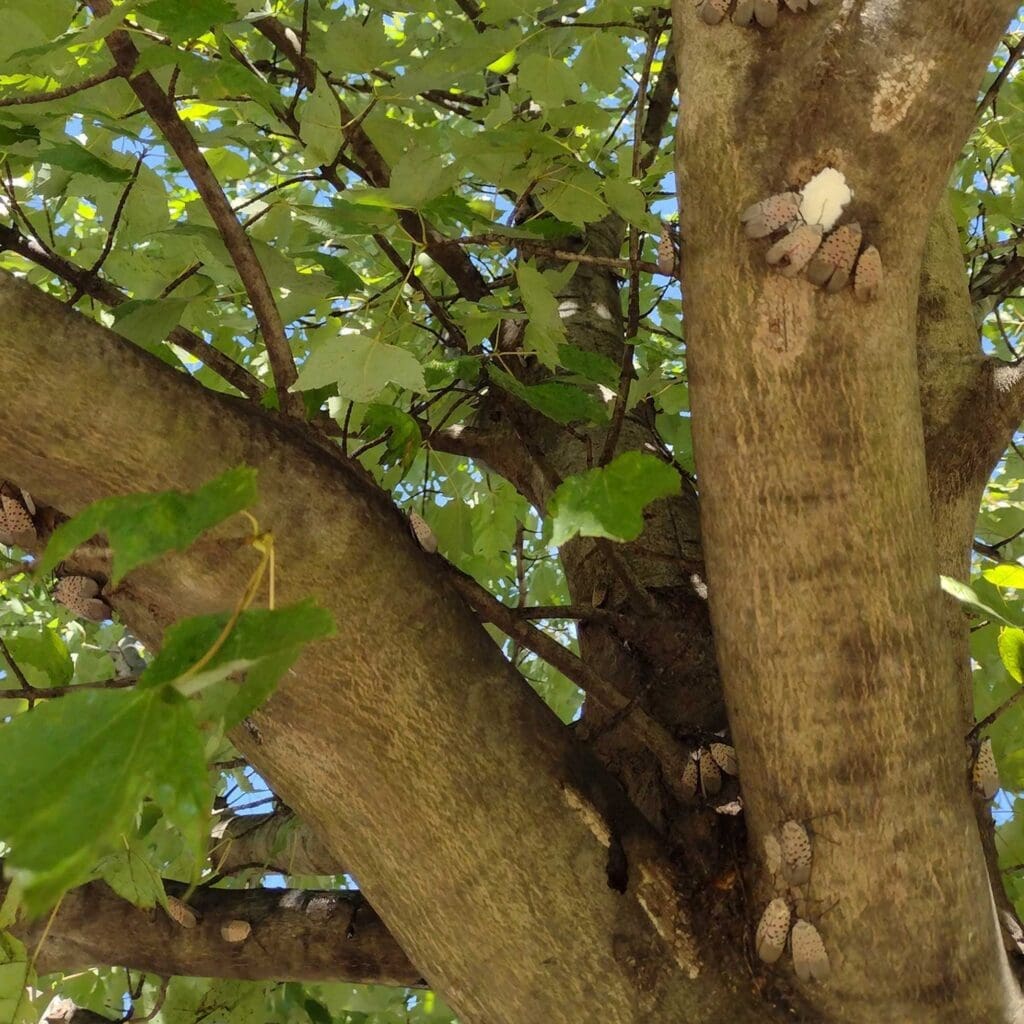
Adults (late summer through fall): Gray, folded wings with black spots at rest, and a bright red underwing with black and white markings visible in flight. This is the stage most people picture when they think “spotted lanternfly.”
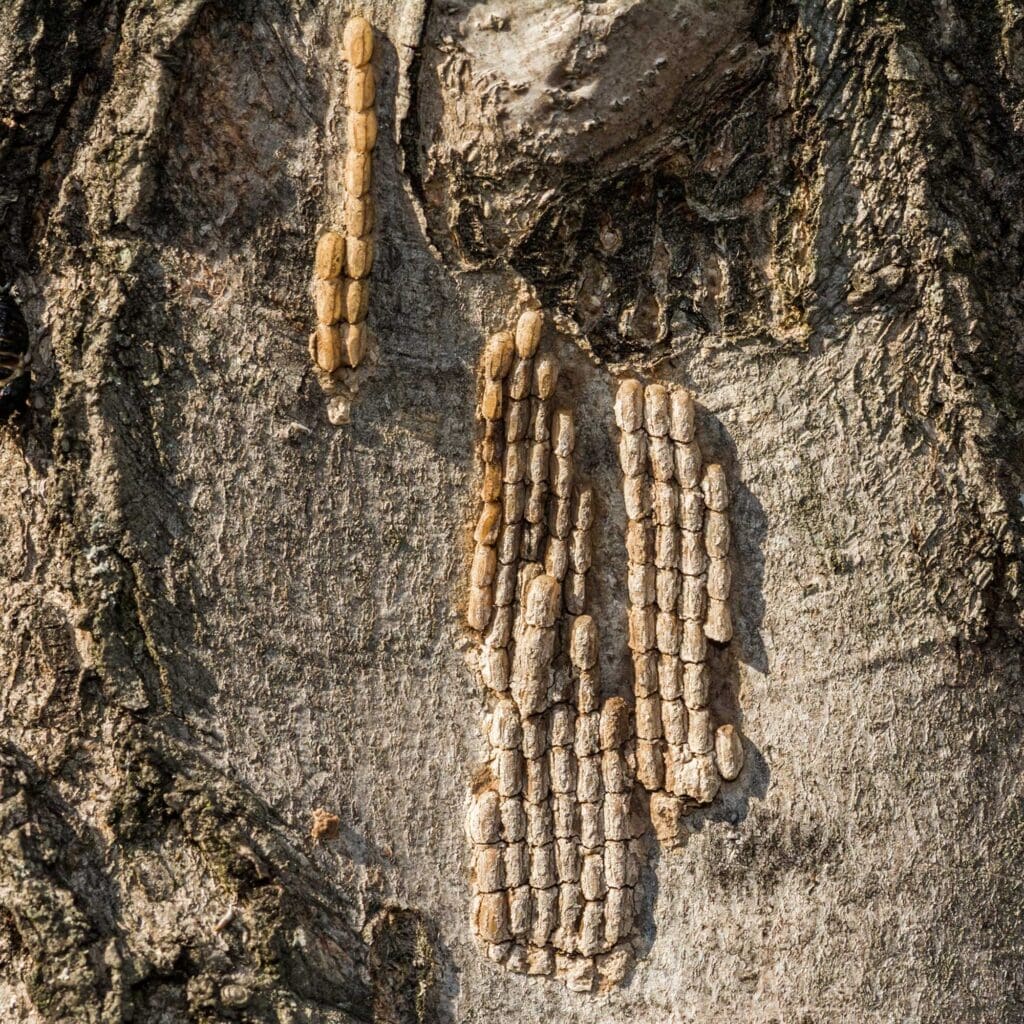
Egg masses (fall through winter): This is the stage people miss the most, and it’s the one that matters most for keeping next year’s population down. Read below for more info.
Egg masses look like a smear of dried mud or wet concrete, about an inch and a half long. Fresh ones are glossy and gray-white. Older ones dry out and crack. Underneath that coating are 30 to 50 tiny eggs lined up in neat rows. Check tree trunks, the underside of branches, patio furniture, grills, and even your car’s wheel wells.
For more help in identifying a spotted lanternfly, Michigan.gov has a wonderful resource on this exact topic.
How To Get Rid Of Spotted Lanternflies
Once you know what you’re dealing with, removal is pretty straightforward.
Kill nymphs and adults on sight. This sounds harsh, but it’s the most effective thing you can do as an individual. Squish them, or spray them directly with pure white vinegar or a mix of dish soap and water.
Both work by suffocation on contact and won’t leave chemical residue behind for pollinators to run into later.
Hot tip: a shop vacuum works surprisingly well. If you’ve got a swarm on a tree trunk, running a wet/dry vac over them is fast and honestly a little satisfying. Just empty the canister into soapy water afterward to make sure they don’t crawl back out.
Scrape and drown egg masses. From September through January, walk your property and look for those mud-smear egg clusters. Use a plastic card or putty knife to scrape them off, and drop them straight into a bag or jar of rubbing alcohol or hand sanitizer. Don’t just scrape them onto the ground. The eggs can survive and hatch there.
Use wildlife-safe traps. Circle traps use a mesh funnel to guide climbing nymphs and adults into a bag or bottle at the top of a tree trunk, and they’re enclosed so birds and beneficial insects can’t get caught. If you use sticky bands instead, cover the outside with wire mesh or bird barrier tape so you’re only trapping the pest you’re after.
Skip the broad chemical sprays. They’re overkill for lanternflies and put birds, bees, and butterflies at real risk.
Have Questions About Your Own Yard?
Every yard in the DC and Mid-Atlantic area is dealing with this a little differently right now, depending on tree types, sun exposure, and how close you are to a heavier infestation zone.
If you’re seeing spotted lanternflies pile up on your trees and you’re not sure where to start, or if you’d rather have someone experienced walk your property and put a plan together post-lanterfly damage, I’m happy to chat. Reach out and we’ll take a look at what your specific yard needs.

I’m a Chevy Chase, DC-area landscape designer with 3 kids and 2 dogs that always keep me on my toes. Nature has always been a part of my life and as a child, I spent countless hours in the garden alongside my mother, learning the rhythm of the seasons and the joy of nurturing a living space. Now, I continue to find inspiration in the beauty of nature.
I founded Lanier Landscapes in 2013 after noticing how many outdoor spaces felt impersonal — beautiful but lacking warmth, functional but uninspired. I’m here to help you create an outdoor space that you can’t wait to come home to.
