
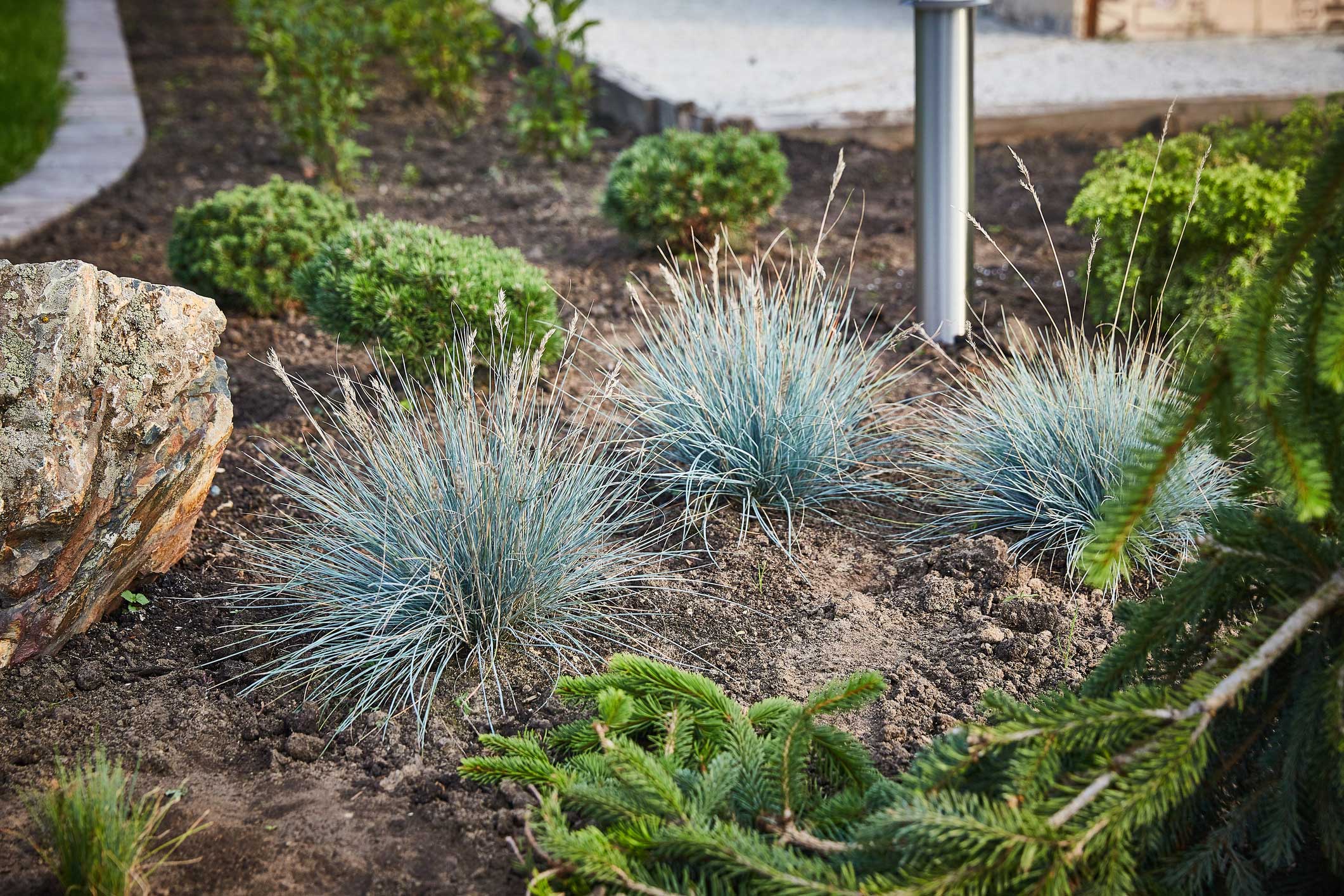
When people think about greenery for yard texture, they usually picture flowering perennials or foliage plants. Ornamental grasses and ferns rarely get top billing, but as a professional designer in the DC area, I believe they are some of the hardest working plants in my tool kit.
Grasses add movement, sound, and structure that nothing else in the garden can replicate, especially when the wind moves through them. Ferns bring a soft, layered texture to shady corners that would otherwise feel empty. Together, they round out a garden in a way that flowers and typical foliage plants simply can’t.
Here’s a breakdown of the grasses and ferns I turn to most often when I need reliable greenery for yard texture in the DMV area.
Ornamental Grasses That Bring Motion and Structure
Grasses are one of the best ways to add height, movement, and seasonal interest to a landscape. Many hold their form well into winter, giving you something to look at even after everything else has gone dormant. Here are some of my favorites:
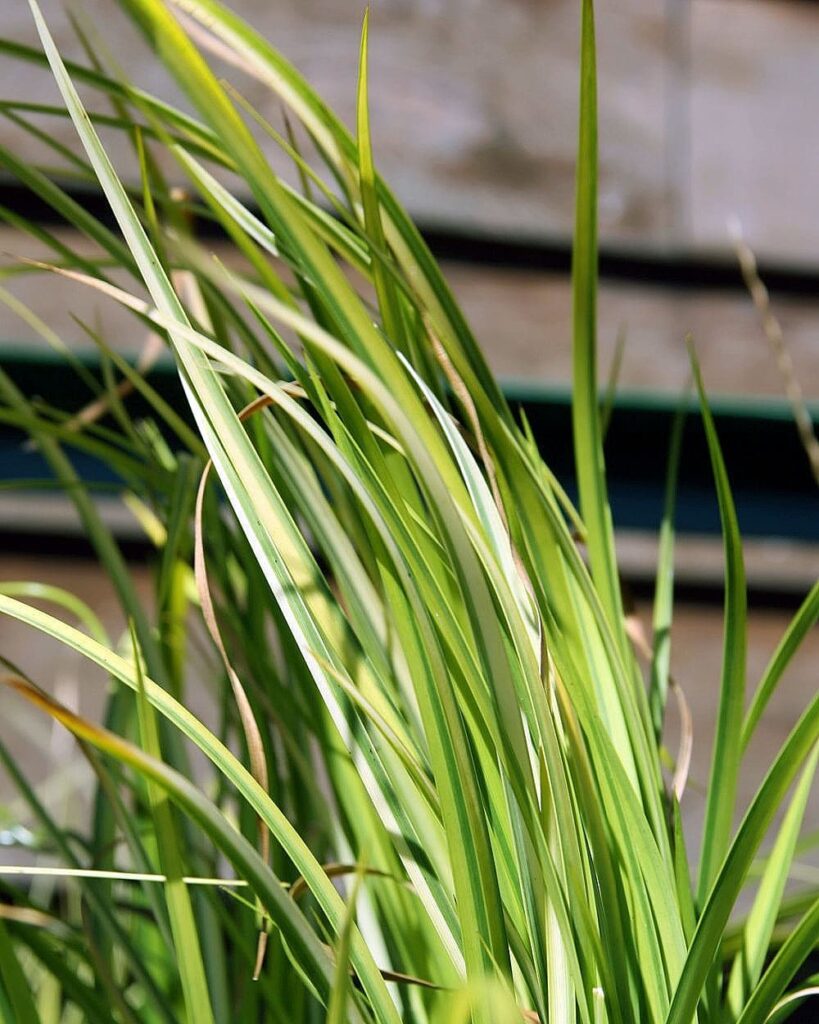
Acorus ‘Ogon’
A golden variegated grass-like plant that thrives in moist soil and brightens up the edges of a water feature or shady border.
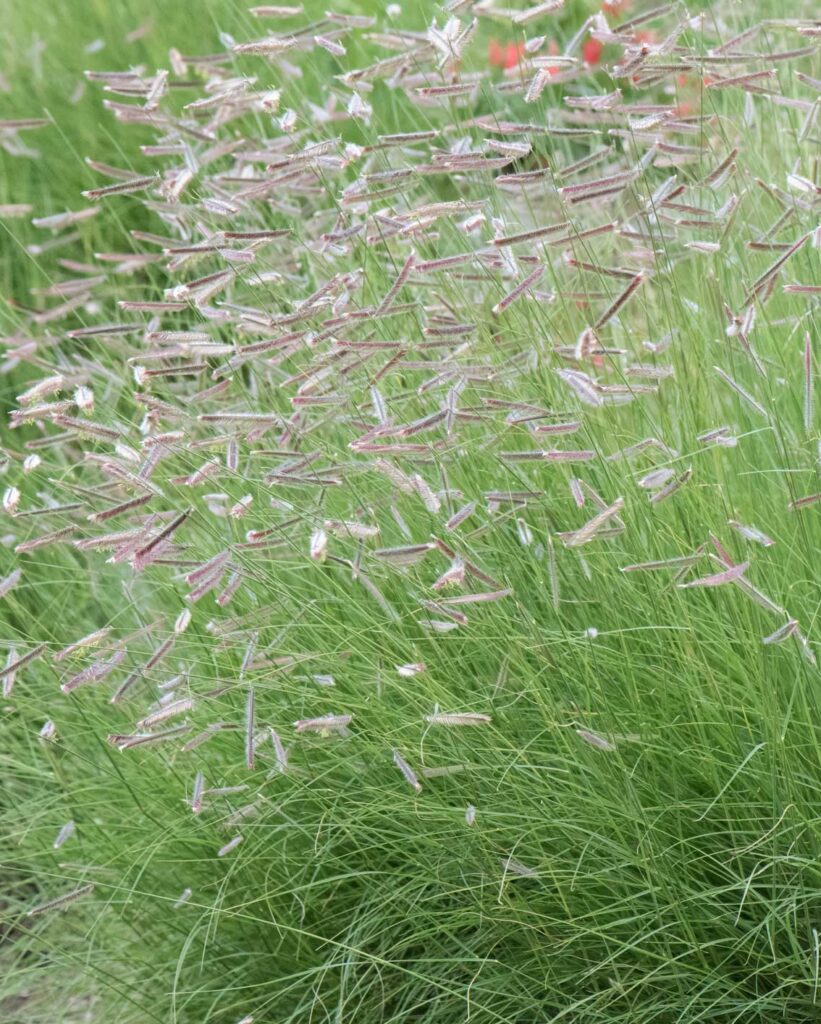
Bouteloua ‘Blond Ambition’
This native grass produces unique horizontal seed heads that look almost like tiny flags. It’s drought tolerant and adds a playful, informal texture to a sunny bed.
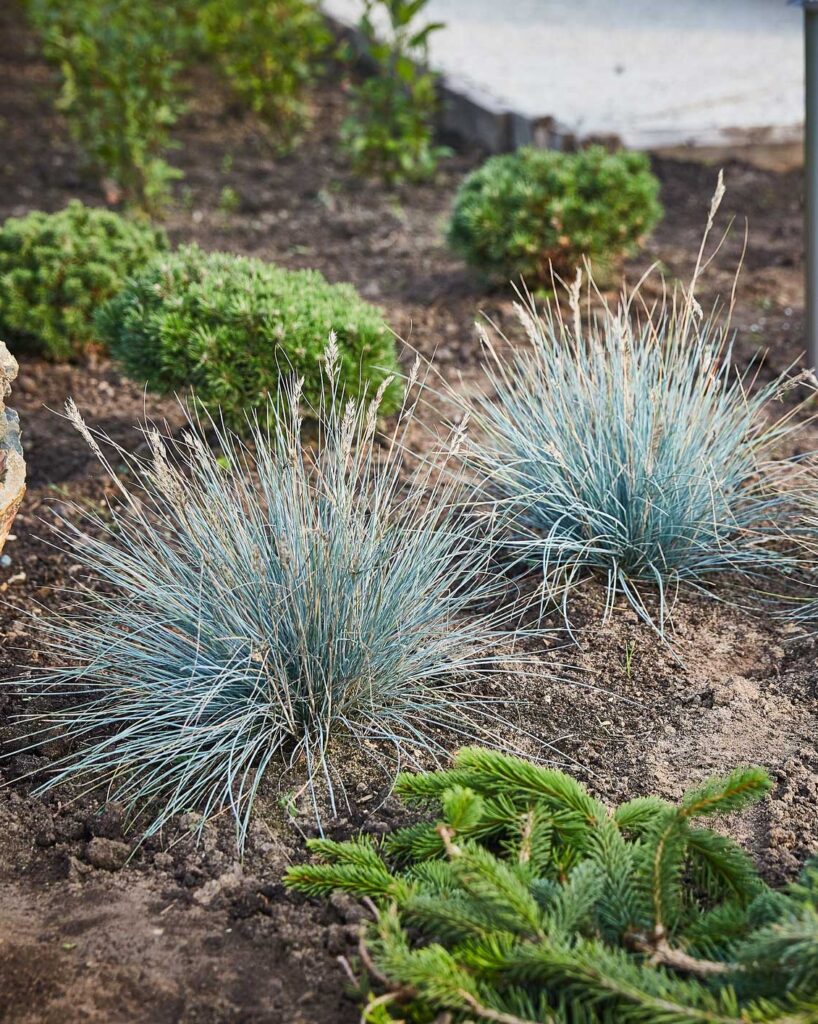
Festuca glauca ‘Cool as Ice’
A compact blue fescue that forms tidy little mounds. It’s a favorite for edging pathways or repeating along a border for consistency.
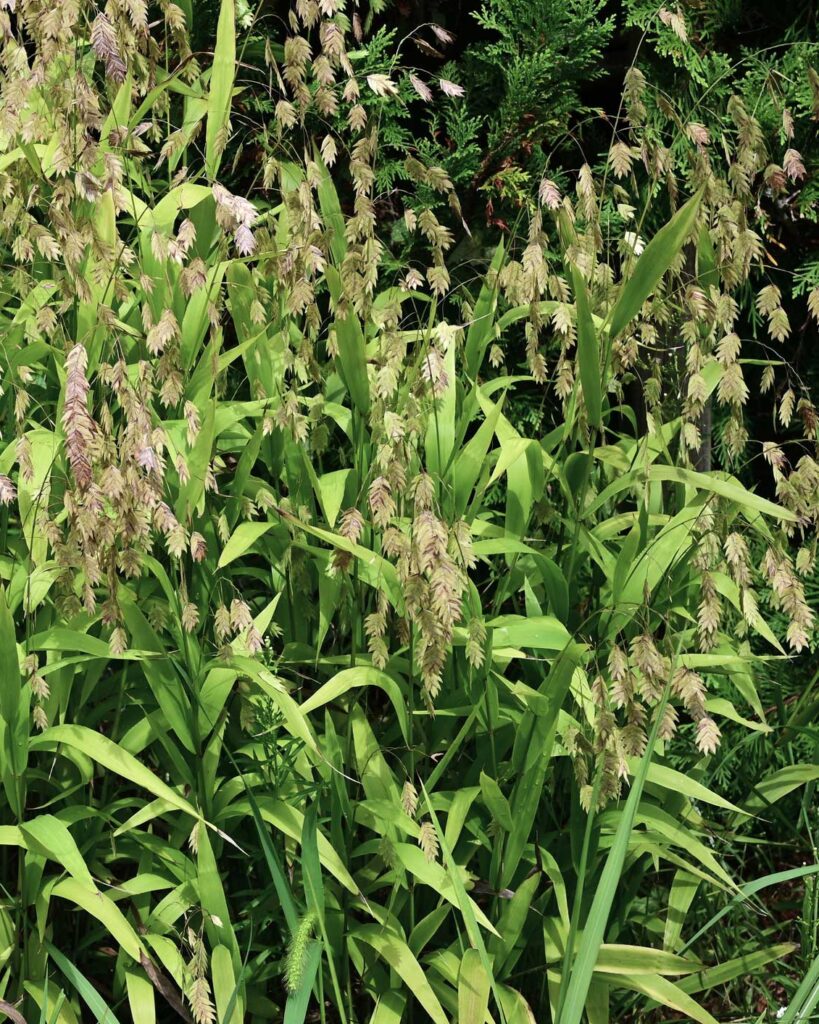
Chasmanthium latifolium
Also known as northern sea oats, this native grass has flat, oat-like seed heads that sway beautifully in the wind. It handles part shade better than most ornamental grasses, which makes it versatile.
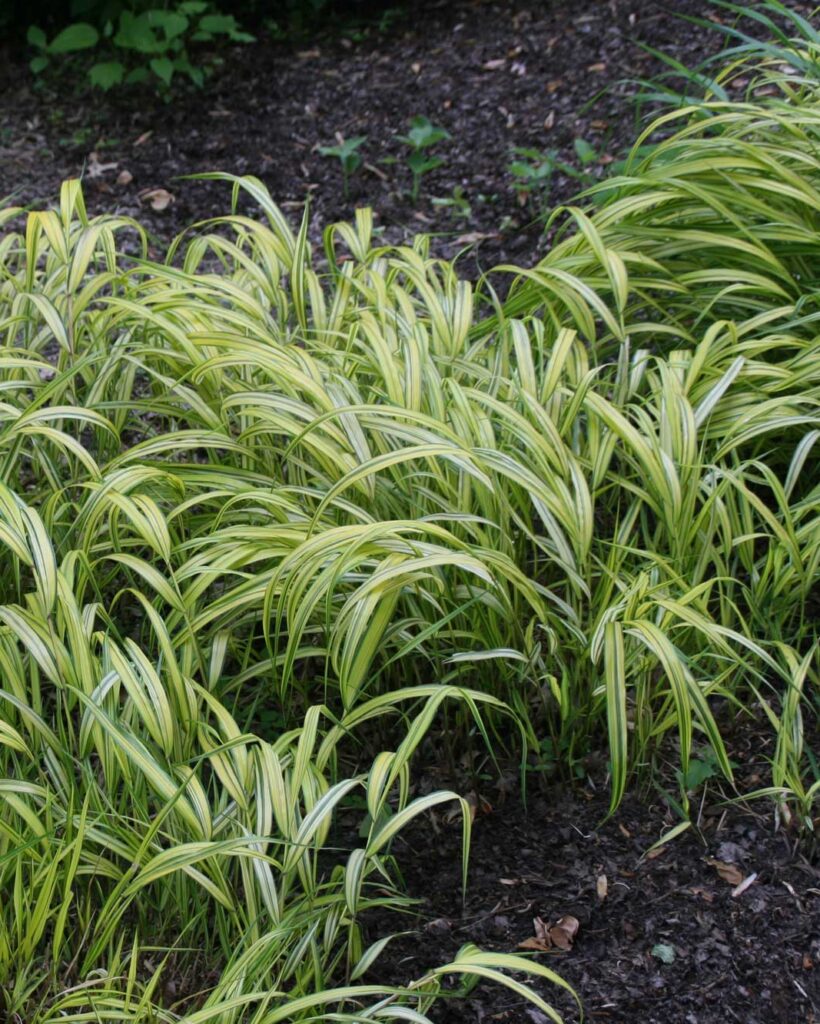
Japanese Forest Grass ‘Aureola’
A shade-loving grass with arching, golden-striped blades that cascade like a little waterfall. It’s one of my top picks for softening the edge of a shaded path.
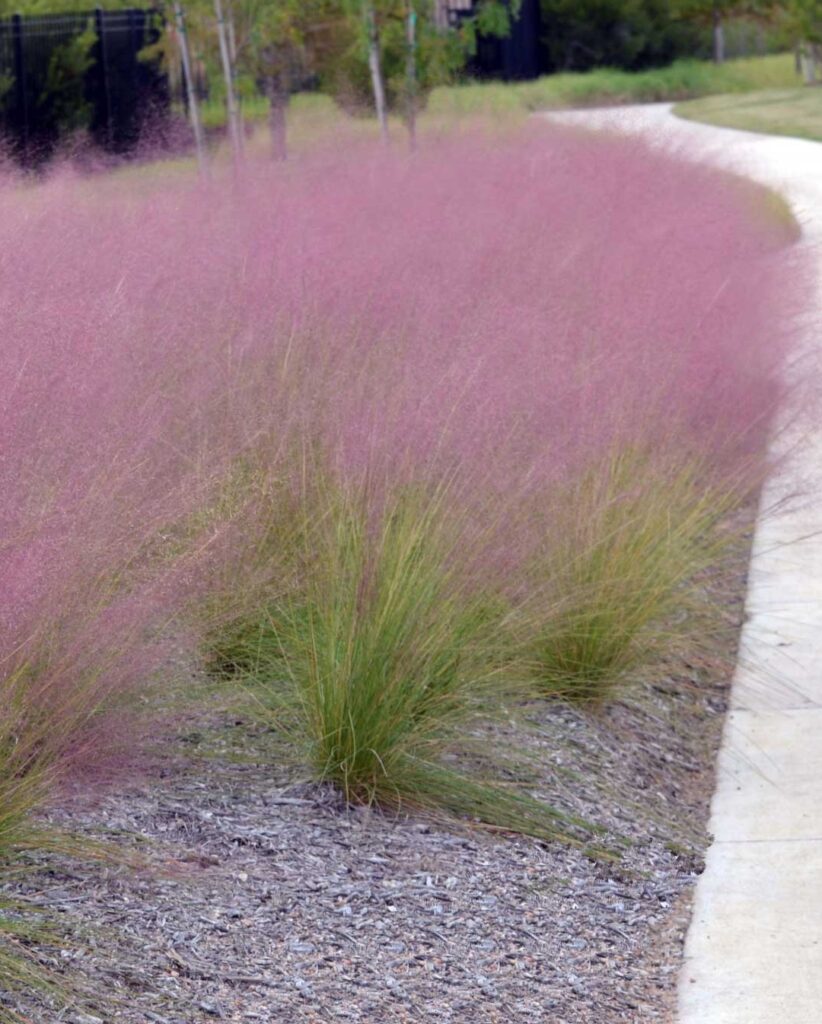
Pink Muhly Grass
Come fall, this grass produces a cloud of pink-purple plumes that stop people in their tracks. It’s a showstopper for a sunny border or a mass planting along a driveway.
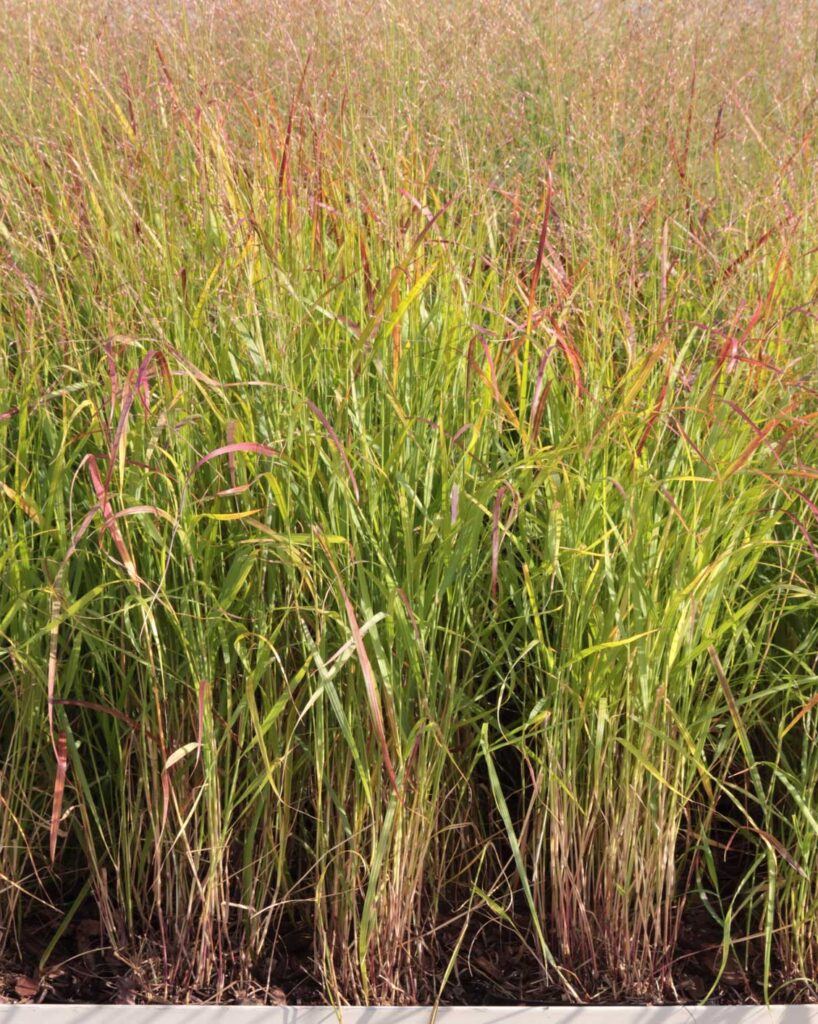
Panicum ‘Cheyenne Sky’ and ‘North Wind’
Both native switchgrass varieties, these bring upright, structural form to a bed. Cheyenne Sky has striking red-tinged blades, while North Wind stays more blue-green and columnar, making it excellent for a formal, vertical accent.
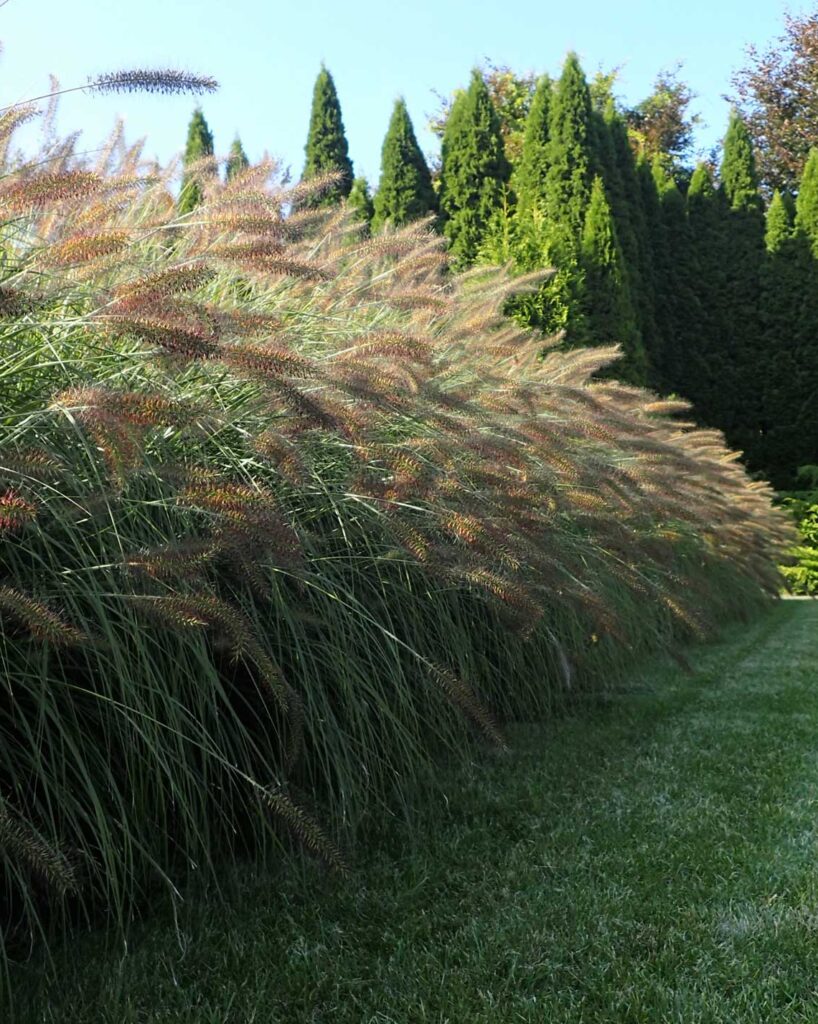
Pennisetum ‘Hameln’ and ‘Rubrum’
Fountain grasses known for their fluffy, bottlebrush seed heads. Hameln stays compact and green through summer, while Rubrum brings deep burgundy foliage for a bolder statement.
Ferns for Layered Texture in the Shade
Ferns solve a problem a lot of homeowners run into: what kind of greenery for yard texture works in the deep shade under mature trees. They add a soft, layered texture that makes a shady spot feel intentional rather than neglected.
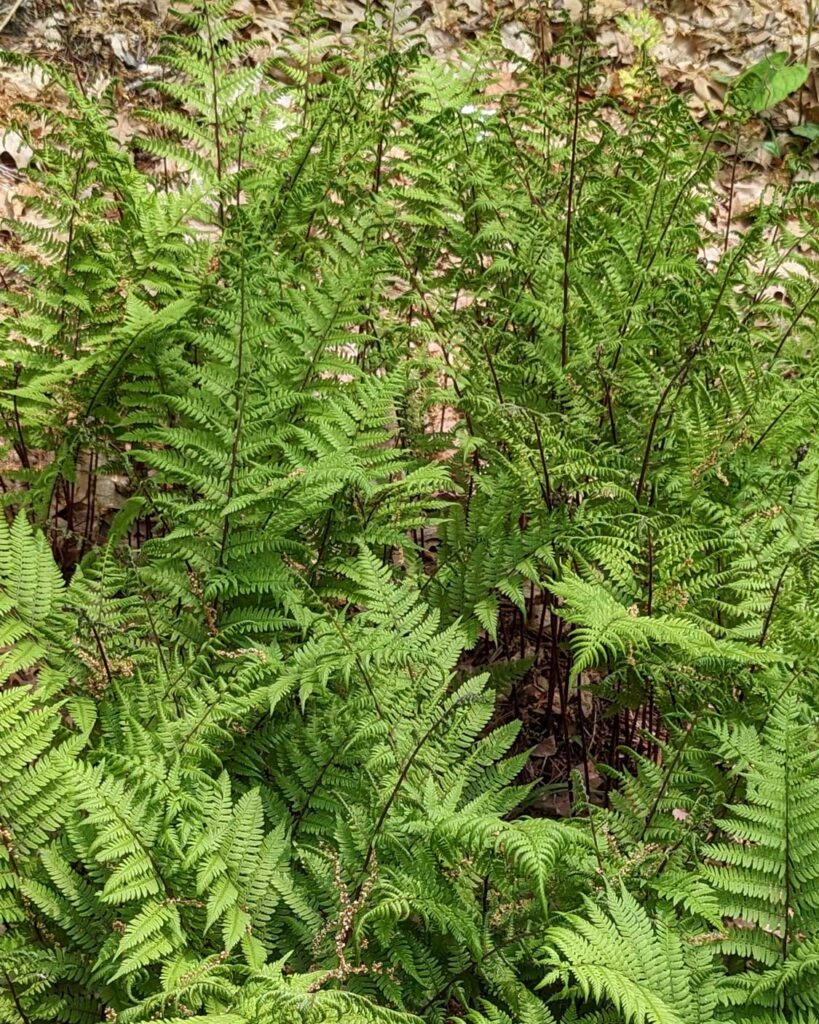
Athyrium ‘Lady in Red’
A native lady fern with wine-red stems that contrast beautifully against its bright green fronds. It brings color into a fern grouping that might otherwise read as all one shade of green.
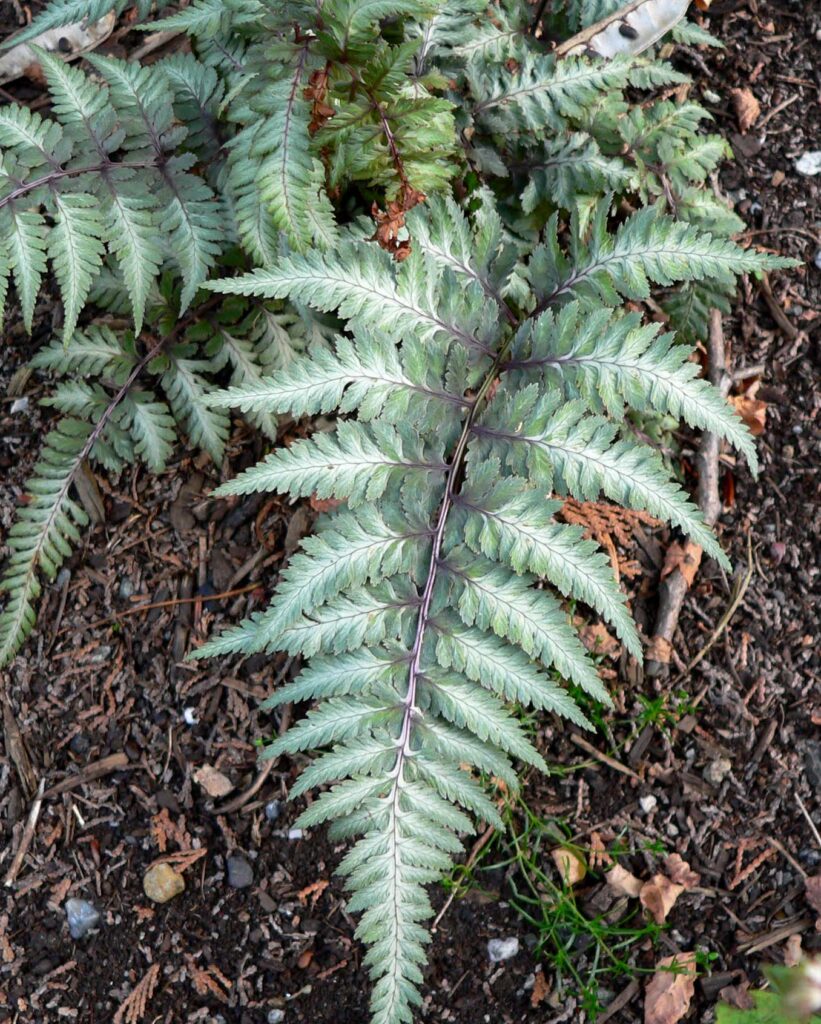
Japanese Painted Fern
Known for its silvery blue-gray fronds with hints of burgundy, this fern is one of the most colorful options for a shade garden.
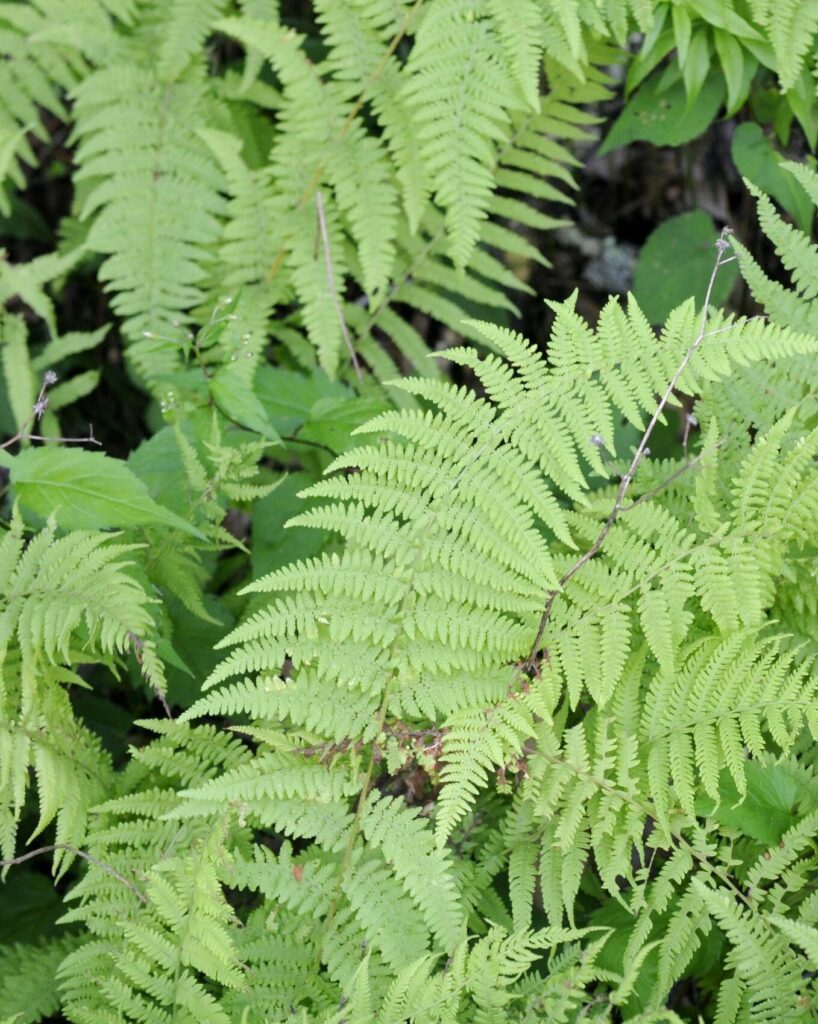
Hayscented Fern
A native fern that spreads to form a soft, textured groundcover under trees. It’s especially useful for filling large shaded areas where grass won’t grow.
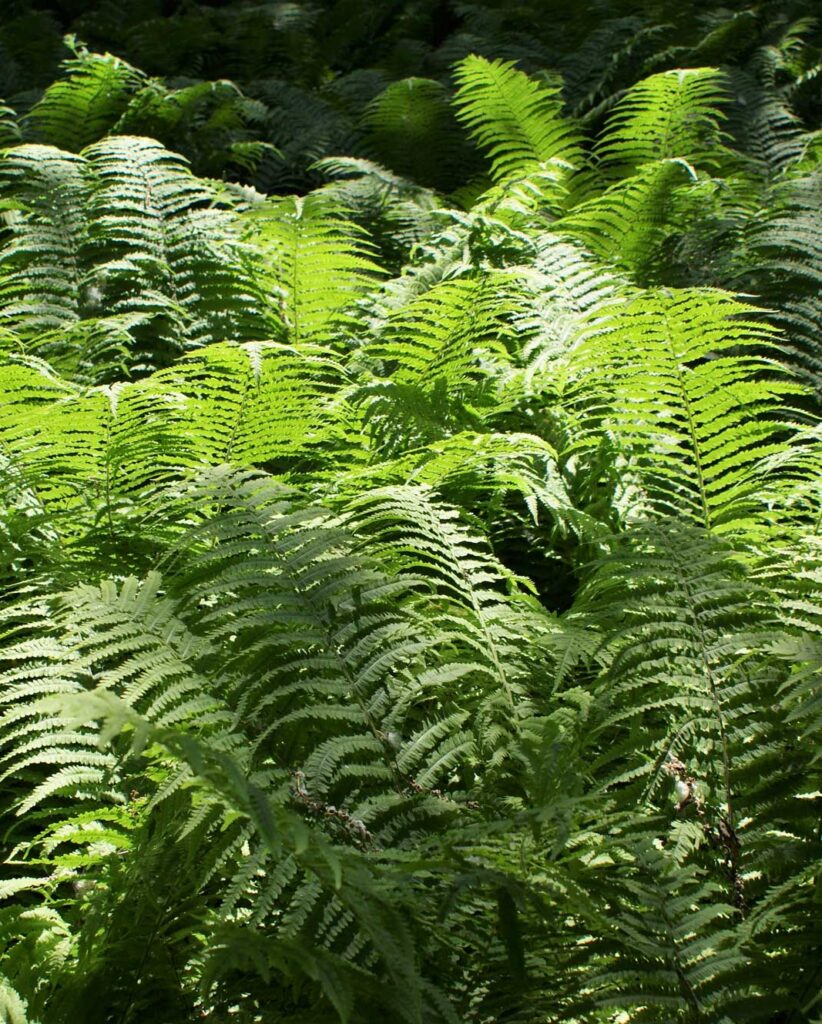
Ostrich Fern
This native fern grows tall and upright with a vase-like form, making it a strong architectural choice for a woodland garden or the back of a shaded border.
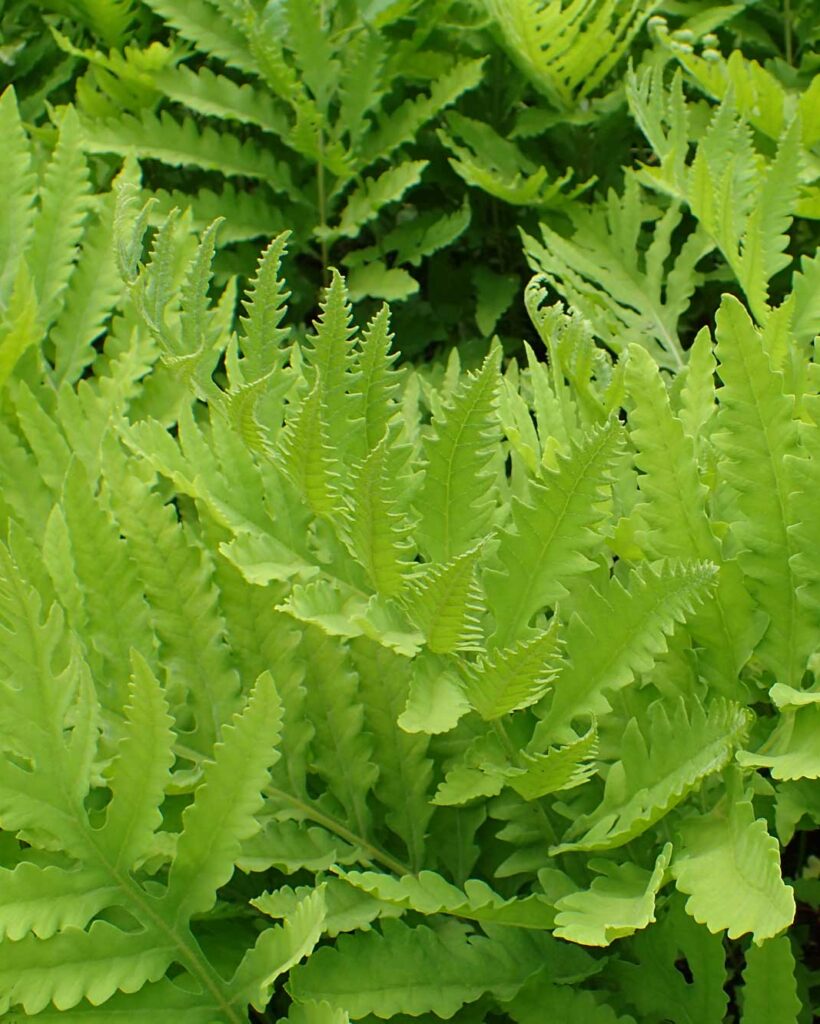
Sensitive Fern
A native fern with broad, coarsely textured fronds that contrast nicely against finer ferns nearby. It tolerates wetter soil better than most, which makes it useful near a low spot in the yard.
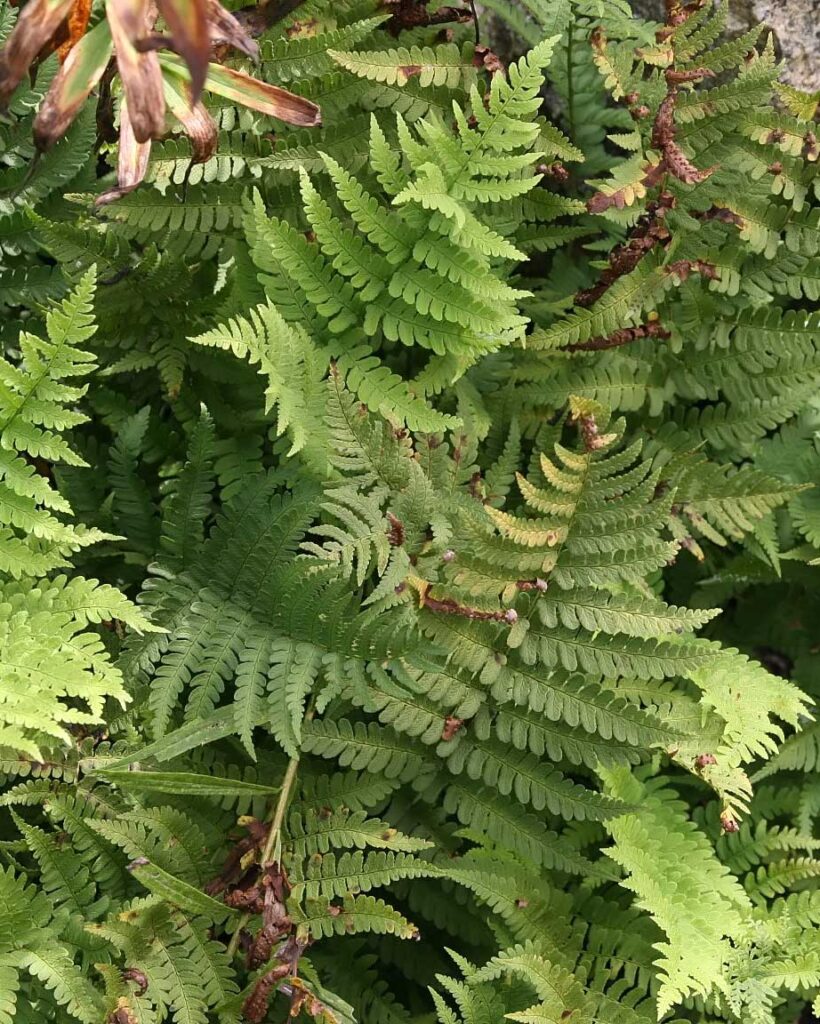
Evergreen Wood Fern
As the name suggests, this native fern holds its foliage through winter, giving a shade garden year-round structure and green when almost everything else has gone dormant.
Bringing Grasses and Ferns Together in One Design
Grasses and ferns might seem like an unlikely pairing, but they complement each other well when you think about sun exposure and texture. Grasses thrive in sunnier spots and bring motion and height, while ferns fill in the shadier corners with a softer, layered texture.
Used together across a property, the right greenery for yard texture creates a landscape that feels dynamic in every season, not just when the flowers are blooming. If you’re looking to add texture and year-round interest to your landscape, I’d love to walk your property with you and talk through what would work best.
Curious About More Ways to Add Texture to Your Yard?
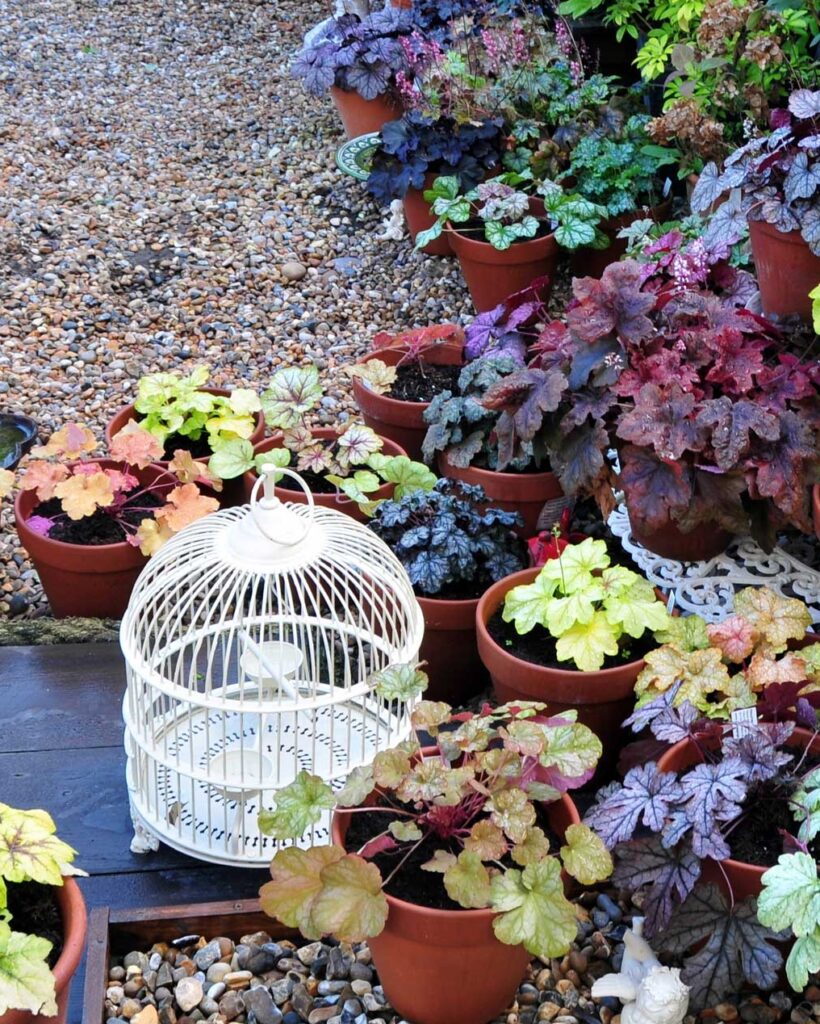
Check out our blog post featuring our favorite foliage to add texture and dimension to your yard.

I’m a Chevy Chase, DC-area landscape designer with 3 kids and 2 dogs that always keep me on my toes. Nature has always been a part of my life and as a child, I spent countless hours in the garden alongside my mother, learning the rhythm of the seasons and the joy of nurturing a living space. Now, I continue to find inspiration in the beauty of nature.
I founded Lanier Landscapes in 2013 after noticing how many outdoor spaces felt impersonal — beautiful but lacking warmth, functional but uninspired. I’m here to help you create an outdoor space that you can’t wait to come home to.
